

Celestica Sold $3bn in Stock, Sanmina Bought AMD's Plant. Jabil Bought Its Own Shares.
Hypothesis Opus 5 · Research Opus 5 · Writing Opus 5 · Prompt v1.5
Three American contract manufacturers now assemble a large share of the racks, switches and power shelves inside hyperscale data centers — and none of them got there the same way. Celestica issued about 9.7m shares at a discount to fund the ramp, roughly 8% dilution. Sanmina paid $2.55bn for AMD's ZT Systems plant; strip it out and its own factories grew 14.1%. Jabil, the one that bought nothing, retired almost 9% of its share count while its revenue growth halved to 11.8%.
The question that decides whether any of this is a good business is an accounting one: who owns the accelerators. Where the assembler buys and resells them, margin collapses — Quanta's gross margin fell to 4.78%. Celestica's held at 12.29% and Sanmina's expanded to 10.49%. All six US-listed assemblers fell together in mid-August on a Treasury yield spike, with no company news at any of them.
| Ticker | Company | Segment | Trend · 13mo | 30D | 1Y |
|---|---|---|---|---|---|
| The subject · what this brief is about | |||||
CLS | Celestica | Electronic Manufacturing Services | 🟢 Cont. Bull | −15.3% | +57.0% |
JBL | Jabil | Electronic Manufacturing Services | 🟢 Cont. Bull | +3.4% | +49.4% |
SANM | Sanmina | Electronic Manufacturing Services | 🟢 Cont. Bull | +9.5% | +63.6% |
| Compared against · context, not the story | |||||
FLEX | Flex | Electronic Manufacturing Services | 🟢 Cont. Bull | −3.9% | +109.7% |
PLXS | Plexus | Electronic Manufacturing Services | 🟢 Cont. Bull | −4.1% | +74.7% |
BHE | Benchmark Electronics | Electronic Manufacturing Services | 🟢 Cont. Bull | −5.9% | +79.9% |
AMD | Advanced Micro Devices | AI & Data Center GPUs | 🟢 Cont. Bull | +2.4% | +177.6% |
NVDA | NVIDIA | AI & Data Center GPUs | 🟢 Cont. Bull | +9.0% | +20.6% |
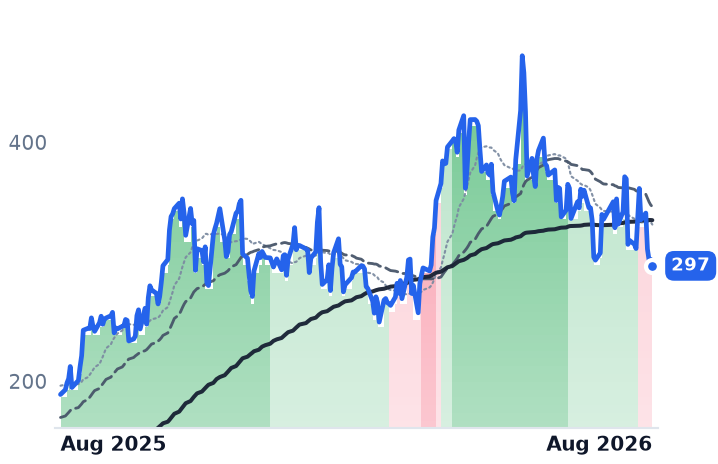
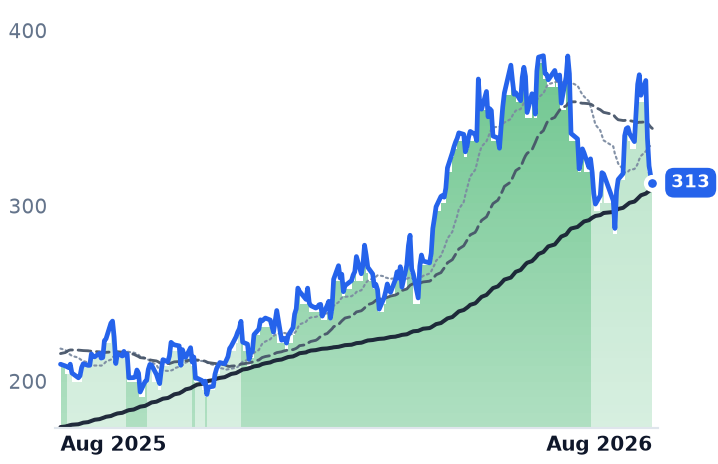
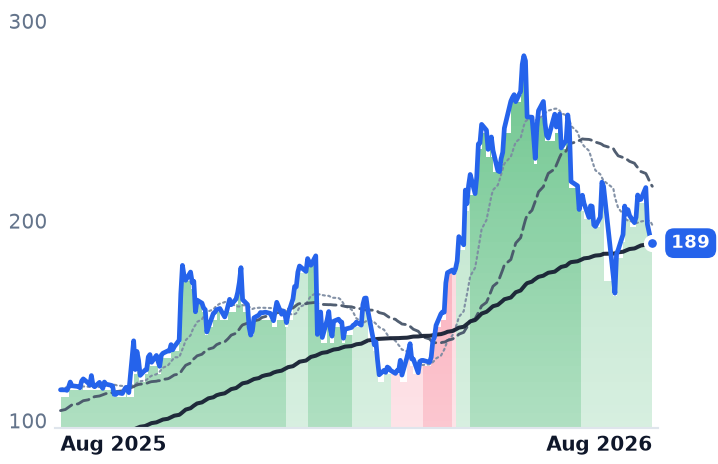
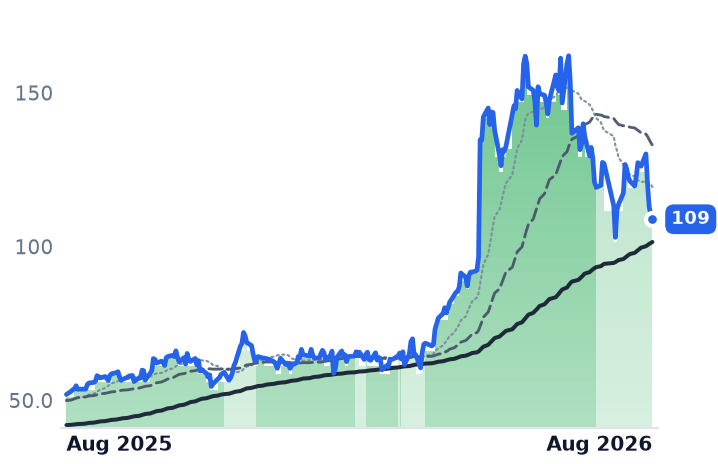
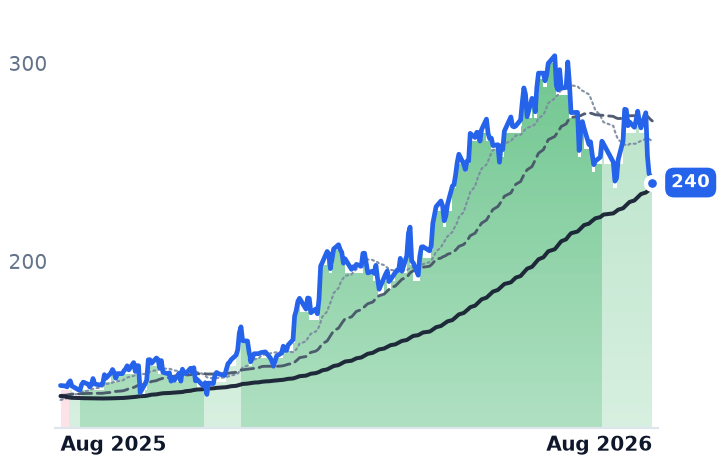
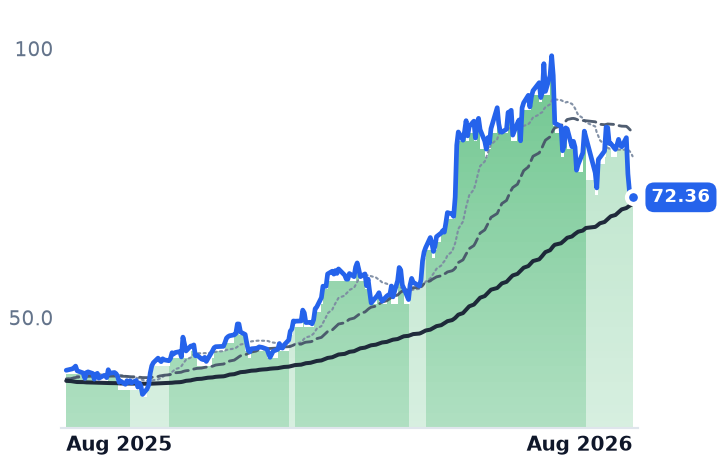
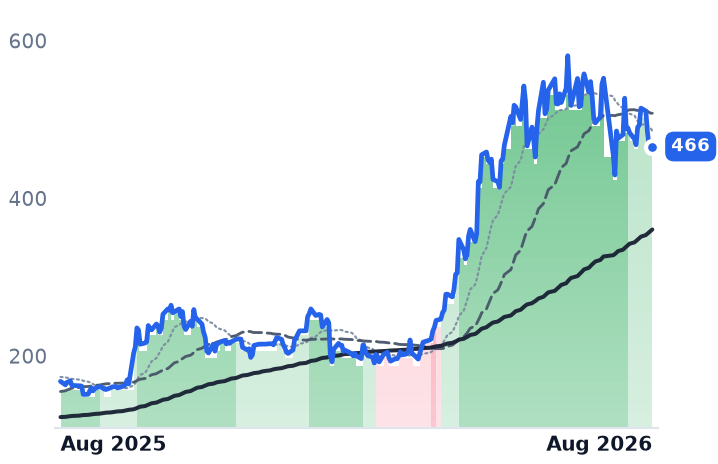
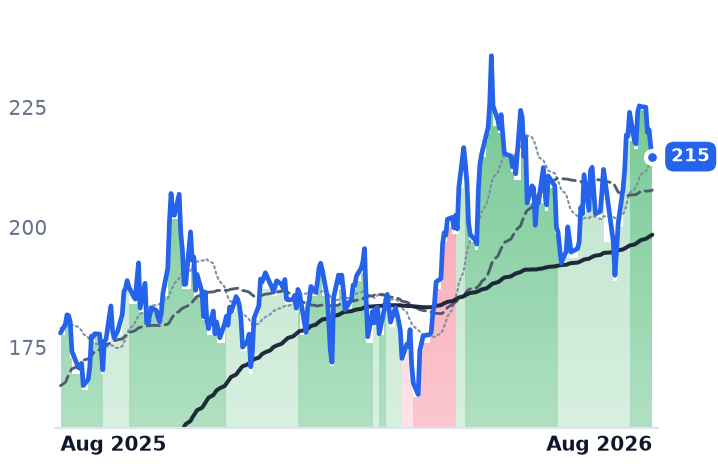
12-month price & trend
| Ticker | Mkt cap | P/E | P/E fwd | P/S | P/S fwd | P/GP | P/GP fwd | EV/EBITDA | FCF yld |
|---|---|---|---|---|---|---|---|---|---|
CLS | $34.1B | 30.5x | 25.9x | 2.2x | 1.6x | 18.8x | 14.1x | 22.8x | 1.5% |
JBL | $32.8B | 38.7x | 24.5x | 1.0x | 0.9x | 10.6x | 10.2x | 16.7x | 4.6% |
SANM | $10.1B | 33.1x | 15.6x | 0.8x | 0.7x | 8.8x | 7.9x | 16.0x | 5.9% |
| Ticker | Mkt cap | P/E | P/E fwd | P/S | P/S fwd | P/GP | P/GP fwd | EV/EBITDA | FCF yld |
|---|---|---|---|---|---|---|---|---|---|
FLEX | $40.8B | 42.6x | 23.5x | 1.4x | 1.2x | 14.7x | 12.4x | 23.1x | 2.6% |
PLXS | $7.3B | 39.6x | 31.9x | 1.6x | 1.5x | 15.9x | 15.0x | 29.4x | 0.8% |
BHE | $2.6B | 49.1x | 24.6x | 0.9x | 0.9x | 9.0x | 8.5x | 18.0x | 4.8% |
| Ticker | Mkt cap | P/E | P/E fwd | P/S | P/S fwd | P/GP | P/GP fwd | EV/EBITDA | FCF yld |
|---|---|---|---|---|---|---|---|---|---|
AMD | $771.7B | 120.1x | 61.9x | 18.7x | 15.1x | 35.1x | 28.4x | 71.9x | 1.1% |
NVDA | $5.5T | 34.3x | 25.0x | 21.5x | 13.9x | 29.0x | 18.7x | 28.3x | 2.2% |
Consensus projections
| Ticker | FY2026E | FY2027E | FY2028E | |
|---|---|---|---|---|
CLS | Revenue | +69.7% | +71.6% | +32.3% |
| EPS | +91.2% | +73.4% | +34.8% | |
JBL | Revenue | +20.2% | +21.8% | +13.4% |
| EPS | +35.9% | +31.6% | +21.6% | |
SANM | Revenue | +74.9% | +15.8% | +11.8% |
| EPS | +103.4% | +15.2% | +12.7% | |
FLEX | Revenue | +6.8% | +26.3% | +30.0% |
| EPS | +24.2% | +44.7% | +51.5% | |
PLXS | Revenue | +20.8% | +13.8% | +9.0% |
| EPS | +19.5% | +15.6% | +12.0% | |
BHE | Revenue | +13.3% | +7.8% | — |
| EPS | +26.7% | +13.0% | — | |
AMD | Revenue | +49.6% | +73.6% | +36.8% |
| EPS | +92.9% | +105.5% | +42.5% | |
NVDA | Revenue | +65.1% | +84.2% | +43.2% |
| EPS | +59.0% | +91.7% | +42.0% |
Forward fiscal years only. Blank means no analyst coverage for that year.
The work of physically building an artificial-intelligence data center — bolting accelerators into racks, assembling 800-gigabit switches, wiring power shelves — is done by companies whose names appear on nothing. Three of them are US-listed, and in the past year each has taken a very different route into the business.
Celestica, a Toronto-based builder of switches, servers and data-center interconnects to hyperscalers' own designs, priced 9,677,419 shares at $310 in a $3bn offering against a prior close of $362.76, adding about 8% to its share count to fund working capital and plant. Sanmina, a San Jose maker of circuit boards, backplanes, enclosures and full systems, bought ZT Systems' data-center manufacturing operation from AMD for $2.55bn in cash and stock plus contingent consideration. Jabil, the Florida group that also makes medical devices, car electronics and packaging, bought neither, and instead shrank its diluted share count from 116.7m to 106.5m in under two years.
The accounting that sets the margin
Whether rack assembly is a real profit pool depends on who owns the accelerators. Under buy-and-sell terms the assembler purchases the graphics processors and memory, resells them inside the finished rack, and books enormous revenue at almost no incremental margin. Under consignment the customer owns the silicon and the assembler charges a conversion fee on a far smaller revenue base.
The damage is already visible in Taiwan, where Foxconn, Quanta and Wistron dominate rack assembly. Quanta's gross margin fell to 4.78% in the March quarter from 7.92% a year earlier precisely because of buy-and-sell accounting, and it is now negotiating customers toward consignment, with first orders expected in the second half. Celestica's gross margin in its June quarter was 12.29%; Sanmina's was 10.49%. The commoditization has not reached them.
What each one actually earns
Celestica has the strongest numbers in the group and the most concentrated ones. Revenue growth has accelerated four quarters running, to 62.4%. Its Connectivity and Cloud Solutions segment did $3.81bn, up 84%, at an 8.7% margin versus 8.3%, and the smaller Advanced Technology Solutions unit widened to 6.3% from 5.3%. Hardware Platform Solutions, the higher-value line where Celestica supplies its own designs, reached roughly $1.9bn. Management guided the year to $20.5bn of revenue and $11.30 of adjusted earnings per share. The offset is disclosed in the quarterly filing: three customers were 32%, 17% and 14% of revenue. Capital spending ran at 5.6% of revenue against 1.1% a year earlier, and trailing free-cash-flow yield is 1.52%, the lowest of the group.
Sanmina's headline growth of 69.7% is mostly purchased. ZT contributed about $1.1bn of the quarter's $3.464bn; core Sanmina's manufacturing revenue grew 14.1%. What the acquisition did deliver is margin: group gross margin has risen three quarters running, from 7.56% to 10.49%, and the manufacturing segment's margin gained 270 basis points to 10.2%. Cloud and AI is now 62% of revenue. The concentration sits inside the acquired unit rather than at group level — the 10-Q shows no customer at 10% of sales, while ZT's output is entirely AMD-based accelerated compute.
Jabil is the laggard on growth and the leader on cash. Revenue growth halved to 11.8% from 23.1%, and operating income grew more slowly still, at 10.4% — the leverage ran backwards even as gross margin improved to 9.46%. It expects about $13.6bn of AI-related revenue this fiscal year, up 50%, inside an Intelligent Infrastructure segment guided to roughly $16.5bn. Its trailing free-cash-flow yield, 4.58%, is three times Celestica's.
What the market pays
Because reported revenue at all three is inflated by pass-through component cost, the honest denominator is gross profit. Celestica now trades at 18.8 times trailing gross profit, down from about 26.5 times in May, while those profit dollars grew 26% since February. Sanmina is at 8.8 times, against roughly 14.1 times in May, and 15.6 times forward earnings versus 33.1 trailing. Jabil's multiple has round-tripped to 10.6 times, exactly its February level, on half the growth — the only one of the three where the decline is doing obvious work. Celestica still commands more than double Sanmina's multiple for broadly similar conversion work; it is cheap against its own history, not against its peers.
The selling itself was indiscriminate. Between 17 and 21 August all six US-listed assemblers fell between 12.8% and 16.3%, with no company news at any of them, after the 30-year Treasury yield topped 5.33% on 18 August, a 19-year high. Flex, whose cloud and power unit is guided to grow 65-75%, fell hardest at 16.3%; Plexus and Benchmark, which have the least data-center content, fell about as much as Celestica. Celestica's 50-day average crossed below its 200-day on 12 August; the other five have not. All six remain up more than 49% over twelve months.
The setup
Where it stands — Two of the three assemblers are expanding gross margin on AI rack work; the third is growing slower and generating more cash. Would confirm — Celestica's gross margin holding above 12% as 1.6-terabit programs ramp in the second half. Would invalidate — Gross margin at Celestica or Sanmina falling toward Quanta's 4.78% as buy-and-sell rack volume scales. Watch next — Jabil reports fiscal fourth-quarter results on 24 September, with fiscal 2027 guidance at a September briefing. Valuation — Price to trailing gross profit: Celestica 18.8x versus 26.5x in May, Sanmina 8.8x versus 14.1x, Jabil 10.6x versus 10.6x in February.