

Paylocity Guided Fiscal 2027 on Flat Client Headcount; Paycom Cut Its Own Staff 21%
Hypothesis Opus 5 · Research Opus 5 · Writing Opus 5 · Prompt v1.6
Two mid-cap payroll vendors bill largely by the employee, and the employees have stopped arriving. Paylocity's fiscal 2027 forecast assumes client workforce levels are flat; ADP's count of employees on client payrolls grew 1% last fiscal year. Price is doing the work instead — Paylocity's revenue per client rose 5.4% to about $37,200 while its client count grew 7%.
The two share moves came by different routes. Paycom's arrived the session after it raised full-year profit guidance on an operating margin of 31.7%, against 23.2% a year earlier, having cut more than 500 roles it said artificial intelligence could do. Most of Paylocity's gain predates its own numbers, and 1.2 to 1.4 percentage points of next year's margin improvement comes from stretching an amortization schedule by a year.
| Ticker | Company | Segment | Trend · 13mo | 30D | 1Y |
|---|---|---|---|---|---|
| The subject · what this brief is about | |||||
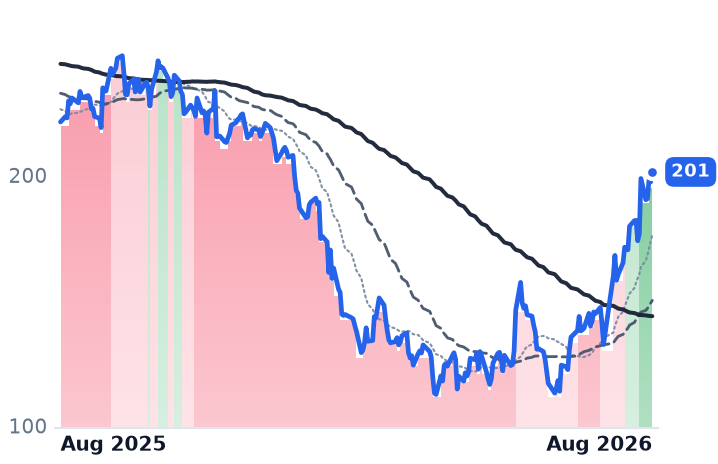
PAYC | Paycom Software | HR & Workforce Management | 🌱 Emerging Bull | +41.6% | −1.4% |
PCTY | Paylocity | HR & Workforce Management | 🔴 Cont. Bear | +27.1% | −15.9% |
| Compared against · context, not the story | |||||
ADP | Automatic Data Processing | HCM Software & Payroll | 🌱 Emerging Bull | +6.3% | −7.0% |
PAYX | Paychex | HCM Software & Payroll | 🌱 Emerging Bull | +13.7% | −8.7% |
WDAY | Workday | Enterprise Resource Planning | 🌱 Emerging Bull | +25.2% | −9.6% |
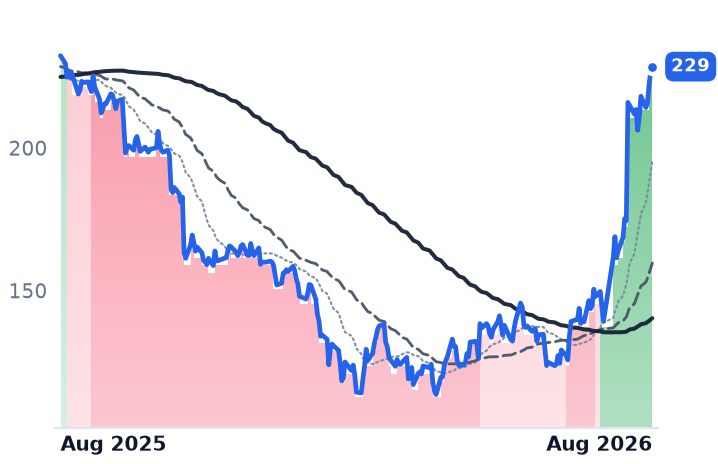
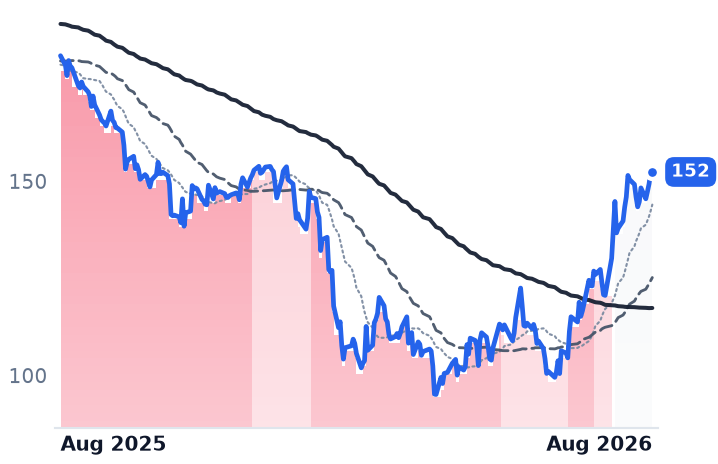
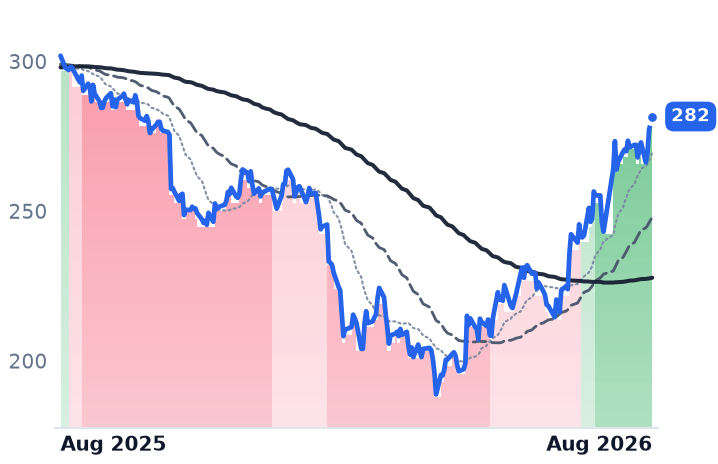
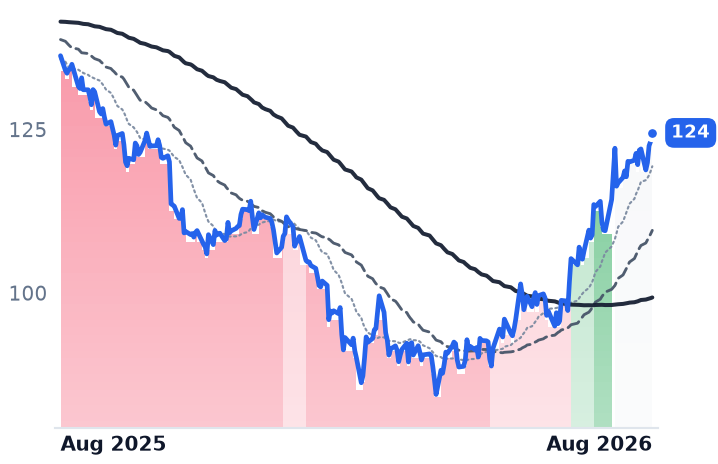
12-month price & trend
| Ticker | Mkt cap | P/E | P/E fwd | P/S | P/S fwd | P/GP | P/GP fwd | EV/EBITDA | FCF yld |
|---|---|---|---|---|---|---|---|---|---|
PAYC | $10.3B | 24.3x | 19.0x | 4.8x | 4.7x | 6.0x | 5.8x | 12.4x | 7.3% |
PCTY | $8.2B | 30.7x | 17.4x | 4.6x | 4.3x | 6.7x | 6.3x | 16.2x | 5.5% |
ADP | $110.8B | 25.3x | 22.6x | 5.0x | 4.8x | 10.5x | 9.9x | 17.6x | 4.5% |
| Ticker | Mkt cap | P/E | P/E fwd | P/S | P/S fwd | P/GP | P/GP fwd | EV/EBITDA | FCF yld |
|---|---|---|---|---|---|---|---|---|---|
PAYX | $32.8B | 20.1x | 16.7x | 5.2x | 5.0x | 7.0x | 6.8x | 12.8x | 6.6% |
WDAY | $52.4B | 62.1x | 18.6x | 5.3x | 4.9x | 7.0x | 6.5x | 33.2x | 5.7% |
Consensus projections
| Ticker | FY2026E | FY2027E | FY2028E | |
|---|---|---|---|---|
PAYC | Revenue | +7.7% | +7.1% | +8.4% |
| EPS | +30.8% | +14.6% | +9.8% | |
PCTY | Revenue | +11.1% | +7.5% | +7.6% |
| EPS | +15.4% | +9.0% | +9.7% | |
ADP | Revenue | +7.0% | +5.9% | +5.7% |
| EPS | +11.0% | +10.6% | +9.3% | |
PAYX | Revenue | +16.5% | +5.4% | +5.4% |
| EPS | +10.1% | +7.6% | +6.5% | |
WDAY | Revenue | +13.4% | +11.8% | +11.0% |
| EPS | +26.5% | +18.6% | +17.3% |
Forward fiscal years only. Blank means no analyst coverage for that year.
Paylocity, which sells cloud payroll and human-capital software to mid-sized American employers and is paid largely by the employee, built its fiscal 2027 forecast on the assumption that its clients' payrolls stop growing. Chief financial officer Ryan Glenn told investors on the August 4 call that client workforce levels had risen in the June quarter and year on year, but that next year's guidance assumes them flat.
That assumption is the whole industry's problem stated politely. A per-employee-per-month subscription is arithmetically a census of the customer's white-collar workforce, and the census has flattened: ADP's pays-per-control, the count of employees on client payrolls it bills for, grew 1% in fiscal 2026 and is guided to 0–1%. Combined employment across financial activities, information and professional services peaked in April 2023 and has fallen 2% since. Growth now has to come from price, from modules, or from the vendor's own cost line.
Paycom took it out of its own payroll
Paycom, a single-database payroll and human-capital platform for small and mid-sized employers, chose the cost line. It eliminated more than 500 roles on October 1 — concentrated in customer support and client implementation — explicitly to replace them with software, and ended 2025 with 5,770 employees, down about 21% in a year. "So our focus is product automation and that drives cost efficiencies in many areas, including labor," chief executive Chad Richison said on the August 5 call. Second-quarter revenue was $531.2m, up 9.8%, and operating margin reached 31.7% against 23.2%. Full-year adjusted profit guidance went up, to a roughly 46% margin at the midpoint.
Two qualifications survive that. The margin is a recovery, since Paycom's 2025 full-year operating margin fell to 27.6% from 33.7% in 2024. And its annual revenue retention was 91%, improving but below Paylocity's above-92% and ADP's record 92.1%. Employee records on the platform reached 7.4m, up 5% — and that figure includes new clients won, so same-store employment grew by less.
Paylocity took it out of the amortization schedule
Paylocity's answer was attachment. Clients reached about 44,400, up 7%, and average revenue per client rose 5.4% to roughly $37,200 — per-client dollars growing alongside the client count, which is what cross-selling scheduling, spend management and its Ignite AI assistant is supposed to look like. Recurring revenue accelerated to 12.4% growth in the June quarter. Then fiscal 2027 was guided to $1.880–1.895bn, about 7% growth against 11.0% delivered, and 1.2 to 1.4 percentage points of next year's margin gain comes from amortizing deferred contract costs over eight years instead of seven. On the call, Toby Williams said the company is focused on delivering value from its AI agents first and monetizing once enough of it lands. Paylocity still carries roughly 6,900 people against Paycom's 5,770 on a larger revenue base.
What the shares did, and what it cost
Paycom rose 64.4% in thirty days, and roughly a third of that came in the single session after its results, on more than three times normal volume. Paylocity's 27.0% was mostly earned before it disclosed anything: it gained 18.7% between July 22 and August 4, in the same window that carried Workday and other enterprise software names after Nvidia's Jensen Huang argued AI agents will use more software, not less. Its own earnings session added 1.8%. No rate cut was involved — the Federal Open Market Committee held at 3.50–3.75% on July 29, with three dissents for higher rates, and interest earned on client funds fell at both companies.
So the verdict splits cleanly. Paycom's advance is dated to disclosure and visible in the accounts, and it is the cheaper name after the larger move: 12.4x trailing enterprise value to EBITDA and a 7.3% free-cash-flow yield, against Paylocity's 16.2x and 5.5%. At 24.3x trailing earnings it sits where it traded in June 2025 on 17% more earnings and a share count cut a fifth by buybacks. Paylocity's re-rating to 30.7x trailing earnings rests on a business it has just guided to slower growth, with part of the improvement booked rather than operated.
The forecast that matters appears in neither income statement. One vendor has already tested how much of its own payroll its software can replace; the other is assuming its customers will not add to theirs. Both are now selling more product to the same people.