

Only RingCentral Puts a Number on Its AI Revenue: 13% of $2.8bn in Recurring Sales
Hypothesis Opus 5 · Research Opus 5 · Writing Opus 5 · Prompt v1.5
Three companies carry the phone calls and text messages that other businesses' software places. All three reported within a fortnight this summer, and they went three different ways — which rules out one shared macro trade as the explanation.
The surprise is which one looked best. RingCentral, the seat-priced incumbent assumed to be the loser of the AI shift, grew just 5.9% but was the only one of the three to quantify an artificial-intelligence revenue line: customers paying for at least one AI product now sit at 13% of $2.8bn in annual recurring revenue, double a year ago. It also lifted its dividend by two thirds and cut net leverage to 1.5 times.
Twilio's business genuinely accelerated; its multiple accelerated faster. Bandwidth's headline 22% growth was largely carrier surcharges passed through, and it de-rated for good reason.
| Ticker | Company | Segment | Trend · 13mo | 30D | 1Y |
|---|---|---|---|---|---|
| The subject · what this brief is about | |||||
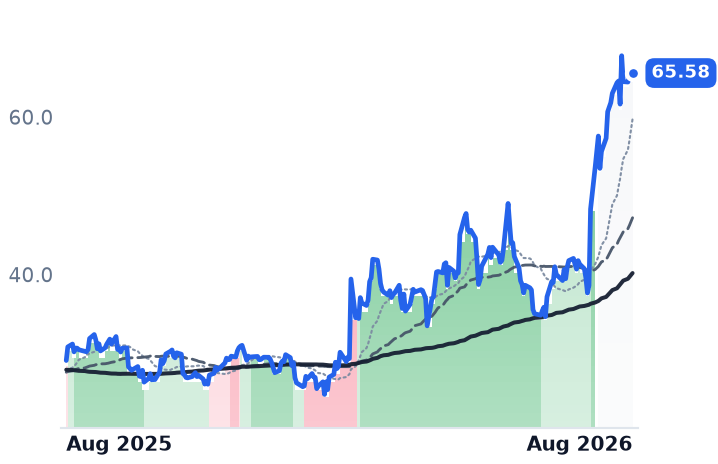
RNG | RingCentral | Communications & Collaboration | 🟢 Cont. Bull | +77.4% | +129.6% |
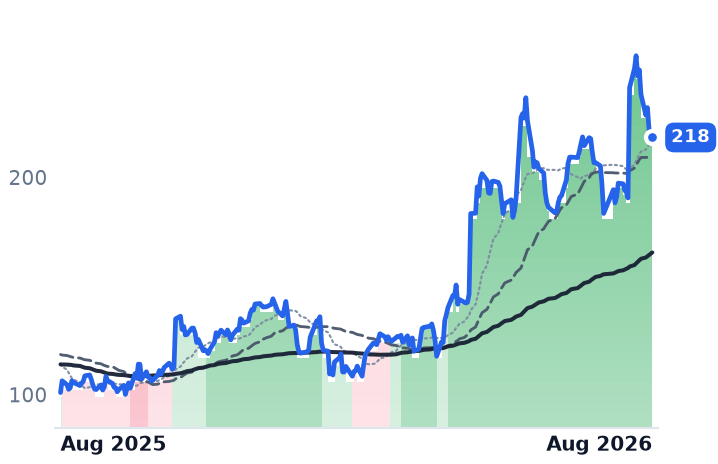
TWLO | Twilio | Communications & Messaging Platforms | 🟢 Cont. Bull | +19.1% | +116.2% |
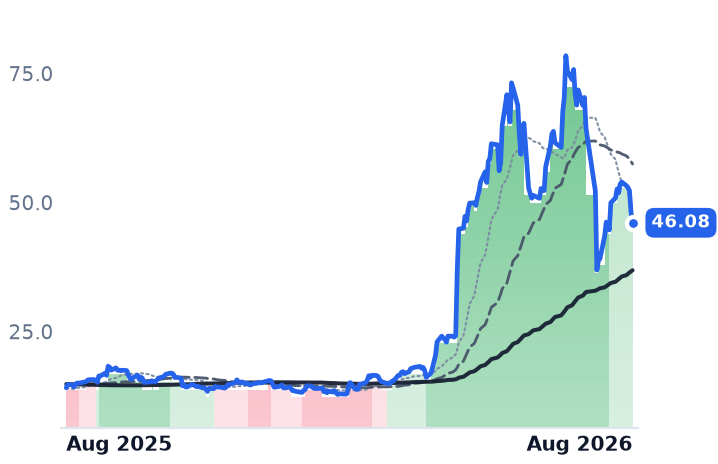
BAND | Bandwidth | Communications & Messaging Platforms | 🌱 Emerging Bull | −28.4% | +226.3% |
| Compared against · context, not the story | |||||
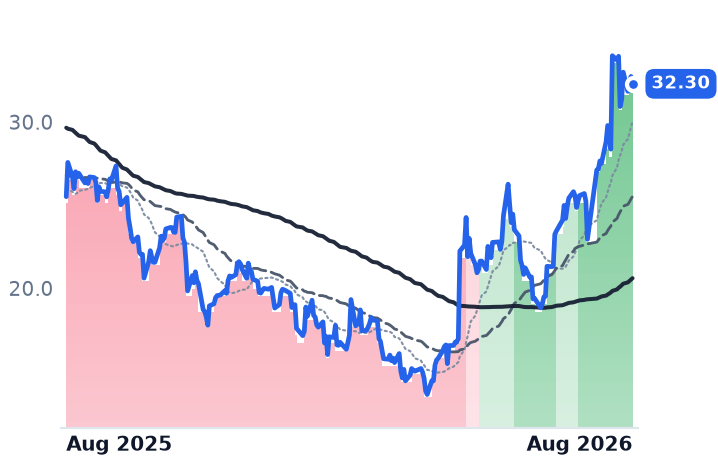
FIVN | Five9 | Communications & Collaboration | 🌱 Emerging Bull | +42.8% | +28.5% |
CRM | Salesforce | Customer Experience & CRM | 🔴 Cont. Bear | +27.7% | −14.8% |
MRNA | Moderna | RNA-Based Therapeutics | 🟢 Cont. Bull | +167.6% | +492.6% |
AMLX | Amylyx Pharmaceuticals | Other | 🟢 Cont. Bull | +132.1% | +387.4% |
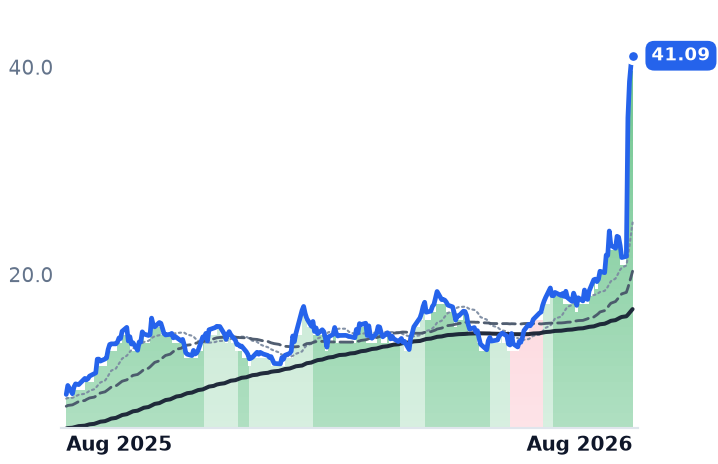
12-month price & trend
| Ticker | Mkt cap | P/E | P/E fwd | P/S | P/S fwd | P/GP | P/GP fwd | EV/EBITDA | FCF yld |
|---|---|---|---|---|---|---|---|---|---|
RNG | $5.8B | 51.9x | 13.3x | 2.2x | 2.2x | 3.1x | 3.0x | 20.8x | 11.6% |
TWLO | $34.2B | 30.0x | 38.0x | 6.1x | 5.7x | 12.6x | 11.8x | 93.9x | 3.2% |
BAND | $1.5B | n/m | 27.1x | 1.8x | 1.7x | 5.0x | 4.5x | — | 4.7% |
| Ticker | Mkt cap | P/E | P/E fwd | P/S | P/S fwd | P/GP | P/GP fwd | EV/EBITDA | FCF yld |
|---|---|---|---|---|---|---|---|---|---|
FIVN | $2.5B | 42.5x | 9.9x | 2.1x | 2.0x | 3.8x | 3.6x | 15.0x | 8.1% |
CRM | $170.5B | 24.0x | 14.7x | 4.0x | 3.7x | 5.1x | 4.8x | 14.5x | 8.6% |
MRNA | $19.5B | n/m | — | 8.7x | 9.3x | — | — | n/m | -8.1% |
| Ticker | Mkt cap | P/E | P/E fwd | P/S | P/S fwd | P/GP | P/GP fwd | EV/EBITDA | FCF yld |
|---|---|---|---|---|---|---|---|---|---|
AMLX | $1.1B | n/m | — | n/m | — | — | — | n/m | -10.9% |
Consensus projections
| Ticker | FY2026E | FY2027E | FY2028E | |
|---|---|---|---|---|
RNG | Revenue | +5.1% | +4.6% | +4.4% |
| EPS | +16.4% | +11.1% | +10.8% | |
TWLO | Revenue | +19.4% | +11.7% | +10.6% |
| EPS | +23.5% | +14.5% | +14.2% | |
BAND | Revenue | +20.0% | +4.3% | +20.2% |
| EPS | +22.2% | +9.9% | +41.0% | |
FIVN | Revenue | +9.5% | +9.9% | +10.6% |
| EPS | +10.5% | +18.0% | +16.6% | |
CRM | Revenue | +9.3% | +11.1% | +9.4% |
| EPS | +17.4% | +20.2% | +10.4% | |
MRNA | Revenue | +9.3% | +19.8% | +26.8% |
| EPS | +8.6% | −44.4% | −39.4% | |
AMLX | Revenue | −99.9% | +55323.5% | +242.9% |
| EPS | −9.1% | −9.9% | −55.0% |
Forward fiscal years only. Blank means no analyst coverage for that year.
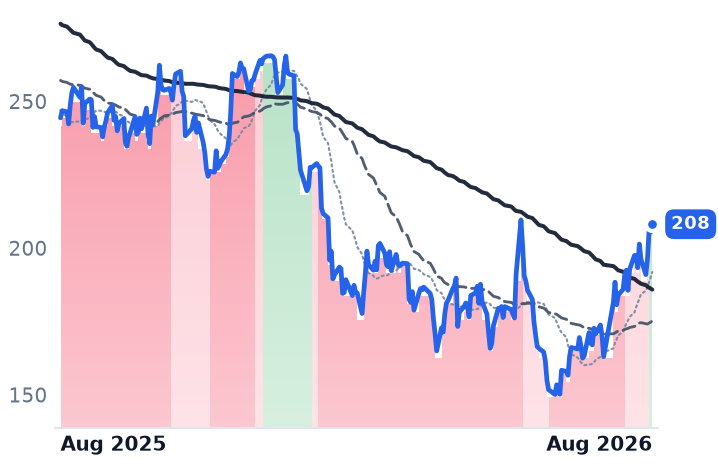
Three companies that carry other businesses' phone calls and text messages reported second-quarter results within a fortnight of one another this summer, and they went in three directions. RingCentral printed on 23 July and jumped a quarter in a session. Bandwidth printed on 29 July and lost nearly a third. Twilio printed on 6 August and rose 27% the next day. Whatever explains this group, it is not one rates trade or one short squeeze.
The unexpected winner is the one that was supposed to be structurally disadvantaged.
The seat-priced incumbent
RingCentral sells cloud phone, video and contact-center software to North American businesses on a per-seat subscription — the model that ought to be threatened if artificial-intelligence agents replace human staff at the desk. Its revenue grew 5.9%, to $657m, the slowest of the three by a wide margin. But it is the only one of the three that publishes a quantified AI figure: customers paying for at least one AI product now account for about 13% of its roughly $2.8bn of annual recurring revenue, twice the share a year earlier, with higher revenue per account and retention above 100%.
The rest of the print was mundane in the way that pays. Gross margin rose 73 basis points to 71.9%, because a subscription business carries no carrier fees in its cost of sales. GAAP operating income rose 36% to $50.3m. Management raised full-year revenue, margin and free-cash-flow guidance, lifted non-GAAP earnings guidance to $4.96–5.10 a share and raised the quarterly dividend by roughly two thirds to $0.125. Its balance sheet, long the bear case, is now unremarkable: $609m of convertible notes were repaid at maturity in March, net leverage is 1.5 times and nothing else matures until 2030.
Even after rising 77% in a month, the shares change hands at 3.1 times trailing gross profit, 13.3 times forward earnings, on an 11.6% trailing free-cash-flow yield. That multiple was 1.75 times the day before the results.
Where the metered model leaks
Twilio sells the voice and messaging plumbing that developers embed in their own applications, billed by usage — the purest way to own an AI agent's traffic. Its revenue growth accelerated for four straight quarters, from 14.3% to 22.0%, dollar-based net expansion reached 116%, and management raised full-year reported growth guidance to 18–18.5% from 14–15%. The business is working.
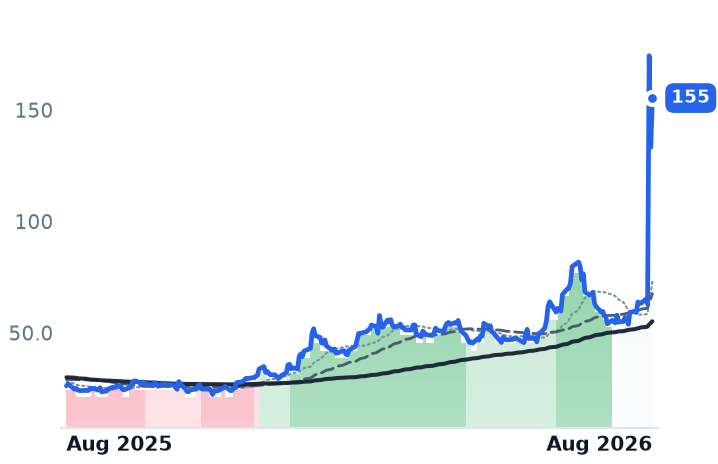
The leak is underneath. Messaging grew 28%, but only about 18% excluding US carrier pass-through fees, which were $71m in the quarter and are running toward $250m for the year. Those fees inflate revenue and sit in cost of sales, so trailing twelve-month gross profit rose 9.1% while the share price roughly doubled from $113.14 in February. Price to trailing gross profit went from about 6.9 times to 12.6 times over six months. And Twilio guided third-quarter organic growth down to 11–12% from 17%. It discloses no AI revenue line at all — its evidence is two unnamed conversational-AI customers that scaled to $6m and $9m of annual spend.
Bandwidth runs its own voice and messaging network out of Raleigh, North Carolina, which should make it the toll-taker rather than the toll-payer. Its 10-Q says otherwise: first-half cost of revenue rose $61m, of which $41m was higher pass-through messaging surcharges, taking gross margin to 36%, down four points. Reported growth of 22.2% became gross-profit growth of 9.6%, and the shares fell 29% on the day despite a raised outlook. That is a quality problem, not a demand problem — voice revenue grew 9%, software services 66%, and every one of five new $1m-plus wins included its orchestration layer or AI services, including production traffic from Salesforce's Agentforce contact center. Nor is debt the issue: $316m of zero-coupon notes due 2032 refinanced the 2028 converts, leaving net leverage at 1.6 times.
The mechanism behind both is the same. US carriers add roughly $0.003 to $0.005 per text message on top of the base rate, a markup of a third to more than half, while per-message prices themselves decline mid-single digits annually. Metered agent traffic arrives with a toll attached. Seat pricing does not.
What the charts say
Twilio has held a clean uptrend since 17 April, its 50-day average above its 200-day for some 84 sessions, and the business supports the direction if not the price paid. Bandwidth's trend broke on 6 August and the shares are down 39% from their 9 July high, at 4.96 times trailing gross profit against about 1.65 times six months ago. RingCentral, oddly, never established a trend at all: the gap-up on 24 July jumped straight over its own moving averages and the shares have shown no directional trend since 28 July.
The setup
Where it stands — The group's slowest grower carries the only disclosed AI revenue metric and the cheapest multiple; the fastest grower carries the highest. Would confirm — RingCentral's AI-paying share of recurring revenue rising above 13% in the third quarter, with gross margin still expanding. Would invalidate — Twilio's third-quarter organic growth landing below the guided 11–12%, or RingCentral's recurring revenue growth slipping under 5%. Watch next — Third-quarter results: RingCentral in late October, Bandwidth and Twilio in early November. Valuation — RingCentral 3.1x trailing and 3.0x forward gross profit, against Bandwidth's 4.96x and Twilio's 12.6x.