

Tower Semiconductor's Optical-Chip Sales Grew 270% and Its Shares Fell 19% in Four Days
Hypothesis Opus 5 · Research Opus 5 · Writing Opus 5 · Prompt v1.5
Three mature-node foundries reported the same thing in early August: the chips that sit around an AI accelerator, not inside it, are now selling faster than the chips that go into phones. Then all three fell hard in four sessions that carried no company news.
Tower Semiconductor's silicon-photonics line — the optical engines inside 800-gigabit and 1.6-terabit transceivers — reached an annualized run rate above $680m, and it has $1.3bn of 2027 revenue already under contract. GlobalFoundries' data-center line grew 62%, but it remains the company's smallest end market, roughly $290m of $1.786bn in quarterly sales.
The three now sit in very different places. GlobalFoundries costs 13.8x trailing gross profit, below where it began the year. Tower costs 55.4x. United Microelectronics, with artificial-intelligence work at about 4% of sales, costs more than GlobalFoundries at 19.0x.
| Ticker | Company | Segment | Trend · 13mo | 30D | 1Y |
|---|---|---|---|---|---|
| The subject · what this brief is about | |||||
TSEM | Tower Semiconductor | Logic Foundries | 🟢 Cont. Bull | −10.9% | +345.0% |
GFS | GLOBALFOUNDRIES | Logic Foundries | 🟢 Cont. Bull | −19.3% | +44.8% |
UMC | United Microelectronics | Logic Foundries | 🟢 Cont. Bull | −13.3% | +174.0% |
| Compared against · context, not the story | |||||
TSM | Taiwan Semiconductor Manufacturing | Logic Foundries | 🟢 Cont. Bull | −1.2% | +84.6% |
SKYT | SkyWater Technology | Logic Foundries | 🟢 Cont. Bull | +5.2% | +195.9% |
MRVL | Marvell Technology | Specialty Semiconductors | 🟢 Cont. Bull | +12.3% | +233.3% |
INTC | Intel | Specialty Semiconductors | 🟢 Cont. Bull | −11.9% | +284.5% |
MU | Micron Technology | Memory (DRAM/NAND) | 🟢 Cont. Bull | +0.1% | +730.8% |
NVDA | NVIDIA | AI & Data Center GPUs | 🟢 Cont. Bull | +1.4% | +22.9% |
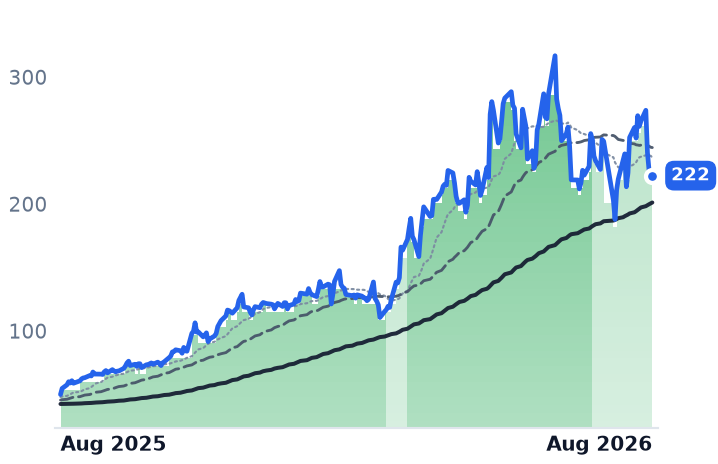
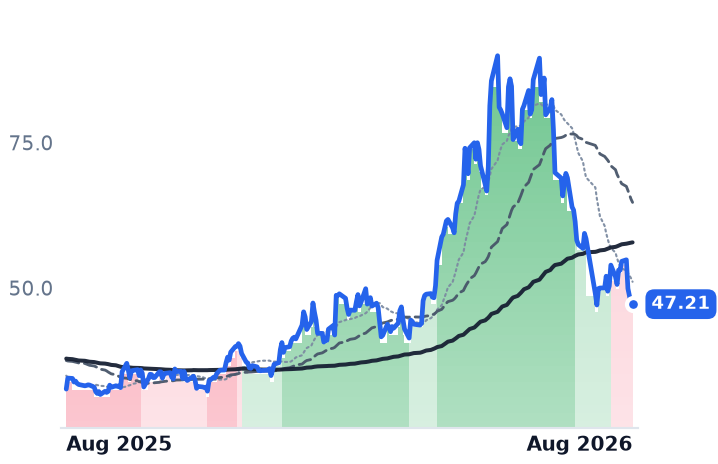
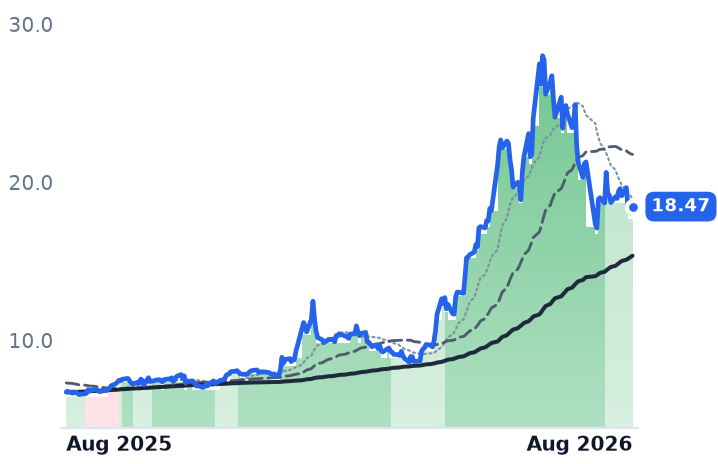
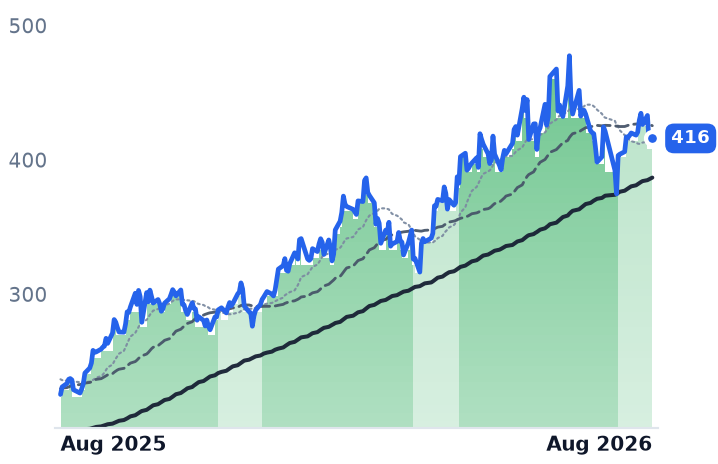
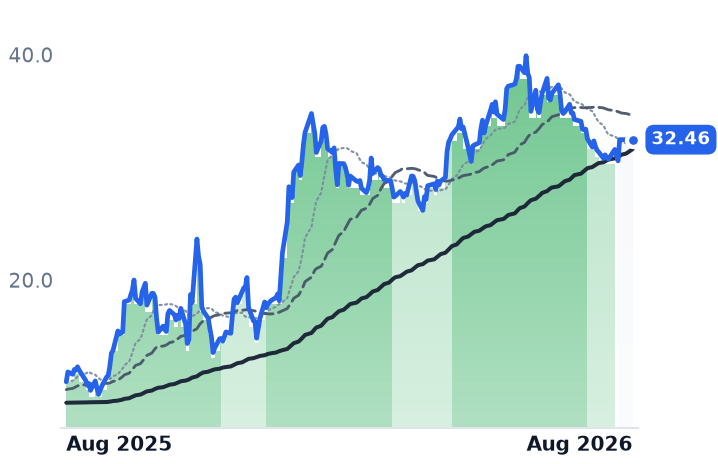
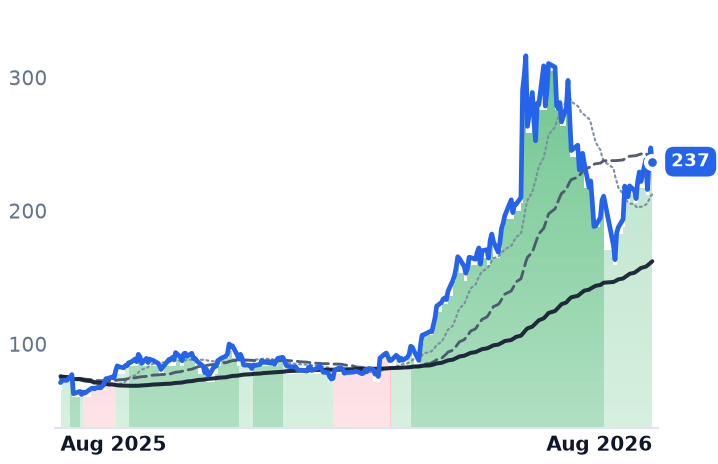
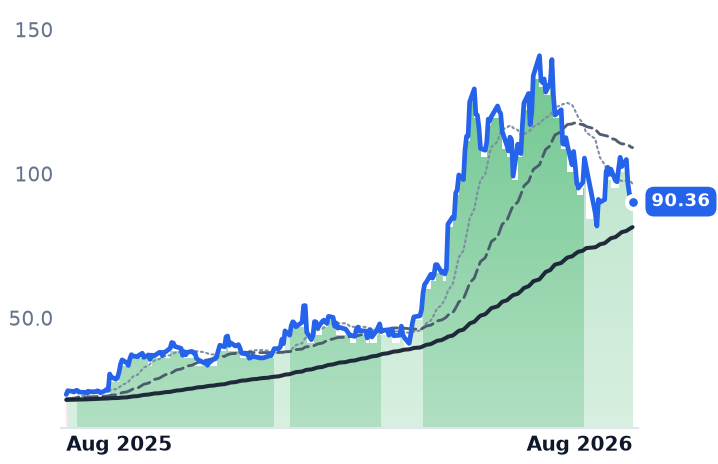
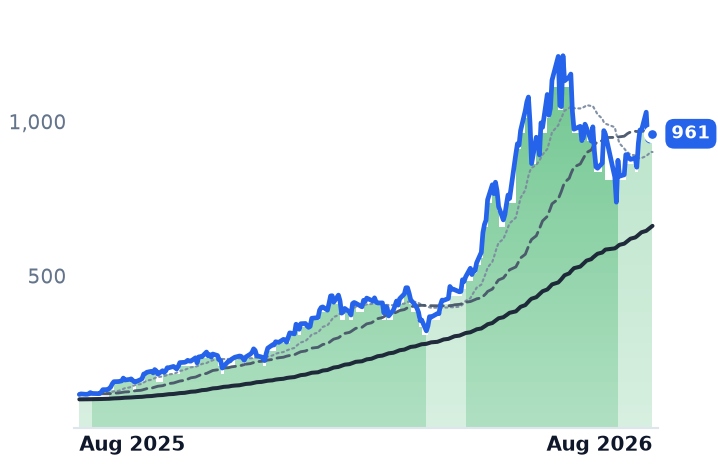
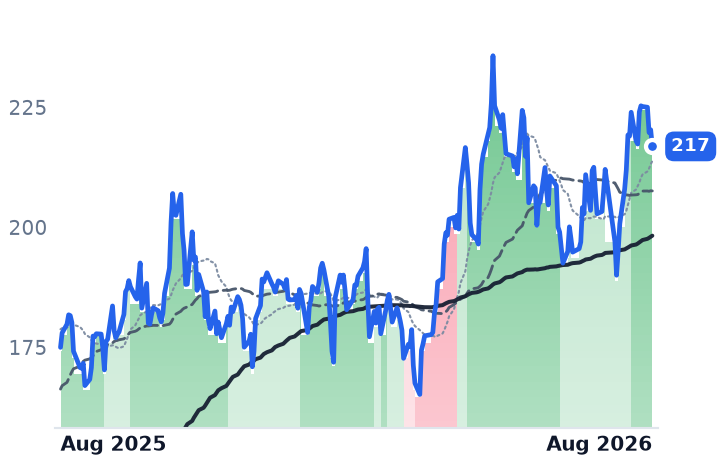
12-month price & trend
| Ticker | Mkt cap | P/E | P/E fwd | P/S | P/S fwd | P/GP | P/GP fwd | EV/EBITDA | FCF yld |
|---|---|---|---|---|---|---|---|---|---|
TSEM | $25.1B | 88.0x | 57.7x | 14.8x | 12.7x | 55.3x | 47.4x | 44.6x | 1.2% |
GFS | $26.4B | 37.2x | 24.8x | 3.8x | 3.6x | 13.9x | 13.2x | 12.7x | 3.0% |
UMC | $45.7B | 17.4x | — | 5.8x | — | 19.0x | — | 9.0x | 4.1% |
| Ticker | Mkt cap | P/E | P/E fwd | P/S | P/S fwd | P/GP | P/GP fwd | EV/EBITDA | FCF yld |
|---|---|---|---|---|---|---|---|---|---|
TSM | $2.1T | 27.5x | — | 13.9x | — | 21.6x | — | 18.2x | 1.8% |
SKYT | $1.7B | 14.9x | — | 3.2x | 2.8x | 16.1x | 14.3x | 12.6x | -4.4% |
MRVL | $230.5B | 92.0x | 65.3x | 26.4x | 20.1x | 52.2x | 39.7x | 50.5x | 0.7% |
| Ticker | Mkt cap | P/E | P/E fwd | P/S | P/S fwd | P/GP | P/GP fwd | EV/EBITDA | FCF yld |
|---|---|---|---|---|---|---|---|---|---|
INTC | $546.7B | n/m | 101.3x | 10.2x | 9.4x | 28.7x | 26.5x | 50.4x | -0.6% |
MU | $1.0T | 19.9x | 12.2x | 11.2x | 7.8x | 15.4x | 10.7x | 14.5x | 2.6% |
NVDA | $5.5T | 34.3x | 25.0x | 21.5x | 13.9x | 29.0x | 18.7x | 28.3x | 2.2% |
Consensus projections
| Ticker | FY2026E | FY2027E | FY2028E | |
|---|---|---|---|---|
TSEM | Revenue | +26.0% | +39.3% | +30.0% |
| EPS | +76.5% | +72.1% | +57.8% | |
GFS | Revenue | +8.0% | +12.3% | +14.0% |
| EPS | +17.7% | +30.5% | +33.4% | |
UMC | Revenue | +18.4% | +24.3% | +14.9% |
| EPS | +111.4% | −1.1% | +22.1% | |
TSM | Revenue | +42.0% | +34.4% | +26.0% |
| EPS | +65.3% | +30.6% | +26.2% | |
SKYT | Revenue | +40.9% | +4.5% | +3.5% |
| EPS | −1120.5% | −60.2% | +284.6% | |
MRVL | Revenue | +42.4% | +40.1% | +44.0% |
| EPS | +82.6% | +41.9% | +51.9% | |
INTC | Revenue | +10.8% | +10.5% | +10.1% |
| EPS | +211.5% | +39.0% | +41.2% | |
MU | Revenue | +248.0% | +92.8% | +11.4% |
| EPS | +804.9% | +111.2% | +7.9% | |
NVDA | Revenue | +65.1% | +84.2% | +43.2% |
| EPS | +59.0% | +91.7% | +42.0% |
Forward fiscal years only. Blank means no analyst coverage for that year.
The chip beside the chip
On 4 August, Tower Semiconductor told investors that a business it barely had two years ago now runs above $680m a year. Tower is an Israeli specialty foundry that manufactures analog and mixed-signal chips — radio-frequency, power management, image sensors — rather than the logic dies that do an accelerator's arithmetic. Its fastest-growing product is the silicon photonic engine: the light-modulating silicon inside the pluggable optical transceivers that move data between racks of artificial-intelligence servers.
That line grew more than 270% year on year and more than 60% sequentially. In May the company signed contracts securing $1.3bn of 2027 silicon-photonics revenue, backed by $290m of capacity-reservation prepayments already received. This is a disclosed revenue line with cash against it, not a strategy slide.
The demand mechanism is countable. Shipments of transceivers running at 800 gigabits per second and above are projected to rise from about 24m units in 2025 to nearly 63m in 2026, taking that class from roughly a fifth of module shipments in 2024 to more than 60%. Every one needs an optical engine printed by someone.
Tower's second-quarter revenue was a record $460.1m, up 23.7%. Gross margin went to 29.9% from 21.5% a year earlier, and operating income more than doubled. Management guided the September quarter to $520m and raised its 2028 model to $3.6bn of revenue at a 45% gross margin. Its stated moat is speed to market, insertion loss and modulator performance, plus exclusivity arrangements with lead customers; with Coherent it has demonstrated 400 gigabits per lane, a generation past today's volume parts.
The same trade, one rung down
GlobalFoundries, the Malta, New York contract manufacturer of power-management units, radio-frequency modems and embedded memory on mature process nodes, is chasing the identical socket. Its Communications Infrastructure and Data Center segment grew 62% year on year, its fastest end-market growth since 2022, with third-quarter guidance implying a $350m exit rate. It won seven optical-networking design wins in the quarter, holds a $300m Commerce Department grant for next-generation photonics, and says it can expand photonics capacity tenfold inside existing fabs.
The catch is arithmetic: the fastest business is the smallest, about 16% of revenue, while Smart Mobile Devices at roughly 36% is guided to fall a low-teens percentage this year on memory shortages. Even so, gross profit rose 23.8% on 5.8% more revenue, with margin up 411 basis points.
United Microelectronics is the control. The Taiwanese foundry's 22- and 28-nanometer nodes hit a record 37% of revenue; utilization climbed to 85% from 79% and is guided above 90%; blended average selling price rose. The mature-node price war is not visible — China's third-largest foundry, Nexchip, raised prices 10% from June, following SMIC and Hua Hong. But UMC puts AI-related revenue at about $300m for 2026, roughly 4% of sales, and its first 12-inch photonics chip is only now in mass production.
Three prices for one story
Measured per dollar of trailing gross profit, the three have moved in opposite directions since spring. GlobalFoundries has gone from 25.0x on 21 May to 13.8x, below its 15.2x level in February, while trailing gross profit grew 11% to $1.90bn — the whole re-rating that followed an investor day at which the shares traded above 50x earnings has gone. Tower fell from 79.4x in May to 55.4x, still 37% above its February anchor and four times GlobalFoundries'. UMC kept nearly all of its re-rating at 19.0x — dearer than GlobalFoundries, on a fraction of the disclosed AI content.
The four-session break was rates, not results. On 18 August the 30-year Treasury yield reached a 19-year high of 5.335% and the semiconductor index had its steepest three-day fall since March. Tower fell 18.8% from the 17 August close, GlobalFoundries 13.9%, UMC 6.1% — against 3.9% at Taiwan Semiconductor. Capacity is what discount rates price: GlobalFoundries is spending 15–20% of revenue, Tower $920m, UMC about $5bn over two years. GlobalFoundries alone now trades with its 50-day average below its 200-day.
The setup
Where it stands — Optical-engine revenue is shipping and growing at two of the three, and all three de-rated in the same week. Would confirm — Tower's silicon-photonics run rate passing $1bn annualized in the December quarter, as guided. Would invalidate — GlobalFoundries' data-center line printing below the $350m third-quarter exit rate management guided. Watch next — Third-quarter results in late October, with Tower guided to $520m and GlobalFoundries to $1.885bn. Valuation — GlobalFoundries 13.8x trailing gross profit against 25.0x in May; Tower 55.4x against a 40.3x February anchor.