

GitLab Gave Its AI Agents Away Free; JFrog Charges by the Binary and Grew 29%
Hypothesis Opus 5 · Research Opus 5 · Writing Opus 5 · Prompt v1.5
Two developer-tools companies made opposite decisions about what to charge for when an AI agent does the typing, and the market has rewarded the one that has disclosed nothing since June. GitLab, priced per developer seat, put its Duo agent platform in front of free-tier users — capability given away to defend the seat rather than sold as a new meter. JFrog, whose registry stores and distributes the compiled binaries software ships as, bills on volume, and says AI coding tools are pushing customers past their contracted minimums: revenue growth accelerated for a fourth straight quarter, to 28.7%, cloud revenue rose 53%, and gross margin widened.
GitLab's revenue growth slowed to 23.1% and its net retention fell to 117%. Over the past month GitLab gained about 32% on analyst target raises alone; JFrog, on the better set of numbers, gained 10%. GitLab reports September 1.
| Ticker | Company | Segment | Trend · 13mo | 30D | 1Y |
|---|---|---|---|---|---|
| The subject · what this brief is about | |||||
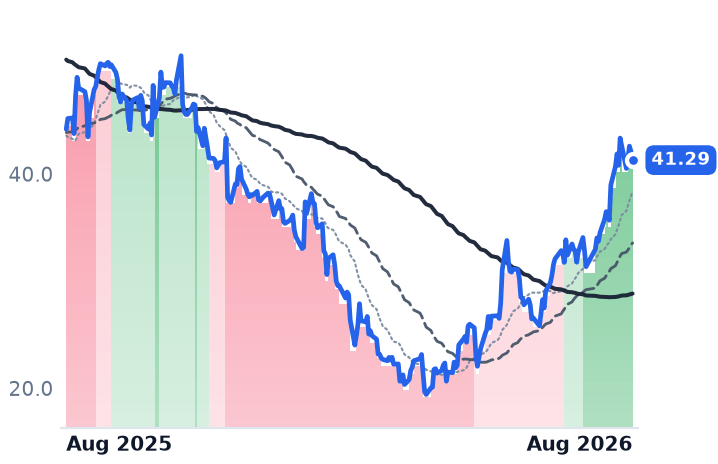
GTLB | GitLab | Developer Tools & DevOps | 🌱 Emerging Bull | +31.7% | −6.5% |
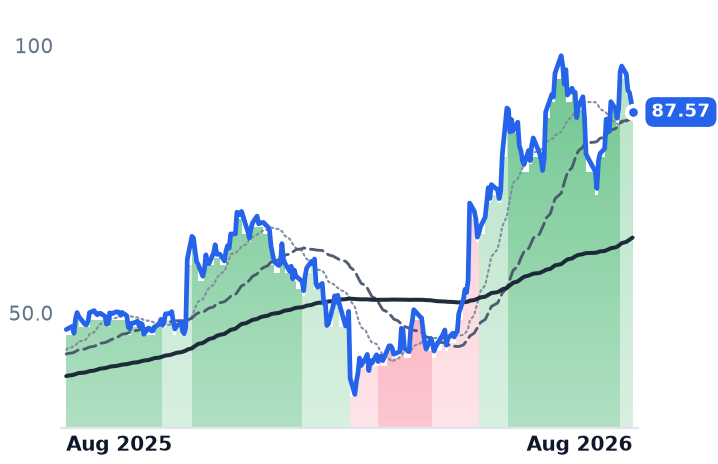
FROG | JFrog | Developer Tools & DevOps | 🟢 Cont. Bull | +9.9% | +86.8% |
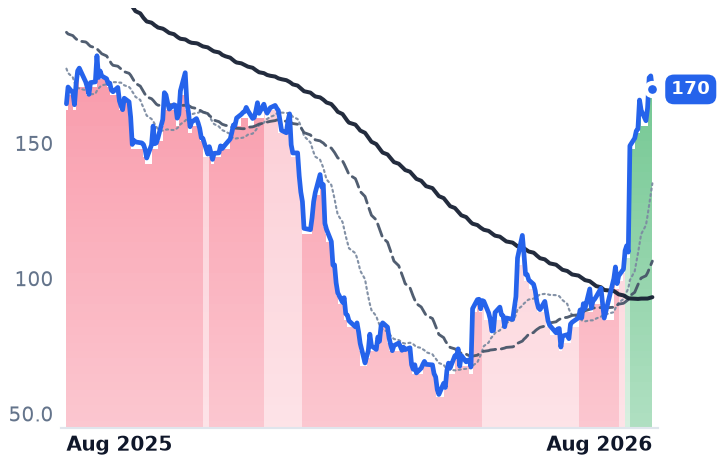
TEAM | Atlassian | Developer Tools & DevOps | 🔴 Cont. Bear | +99.0% | +3.2% |
| Compared against · context, not the story | |||||
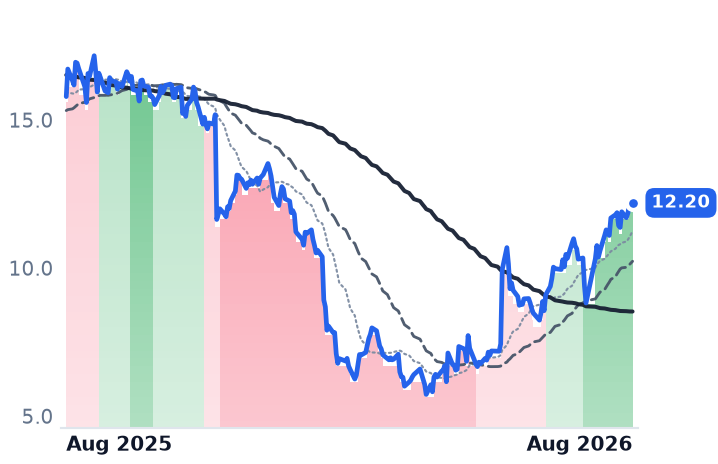
PD | PagerDuty | Developer Tools & DevOps | 🌱 Emerging Bull | +38.3% | −22.7% |
CDNS | Cadence Design Systems | Developer Tools & DevOps | 🌱 Emerging Bull | −7.0% | −9.9% |
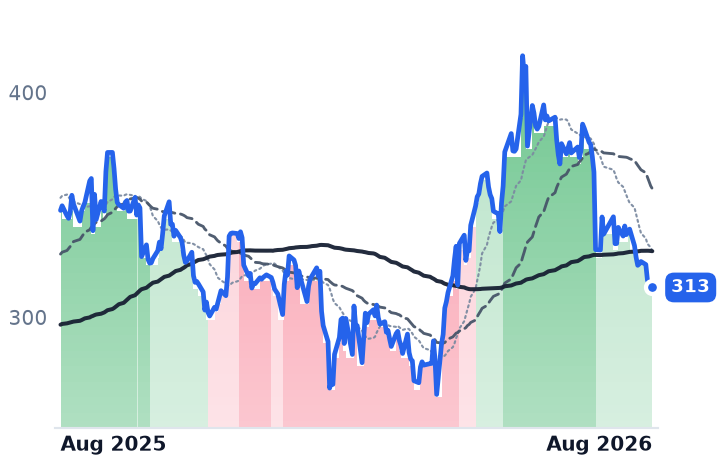
12-month price & trend
| Ticker | Mkt cap | P/E | P/E fwd | P/S | P/S fwd | P/GP | P/GP fwd | EV/EBITDA | FCF yld |
|---|---|---|---|---|---|---|---|---|---|
GTLB | $7.0B | n/m | 50.8x | 6.9x | 6.3x | 8.0x | 7.2x | n/m | 3.8% |
FROG | $10.9B | n/m | 92.2x | 18.3x | 16.8x | 23.4x | 21.6x | n/m | 1.5% |
TEAM | $44.9B | n/m | 31.1x | 6.8x | 6.0x | 8.1x | 7.1x | 297.7x | 2.9% |
| Ticker | Mkt cap | P/E | P/E fwd | P/S | P/S fwd | P/GP | P/GP fwd | EV/EBITDA | FCF yld |
|---|---|---|---|---|---|---|---|---|---|
PD | $1.1B | 5.7x | 9.0x | 2.2x | 2.2x | 2.6x | 2.6x | 23.0x | 11.5% |
CDNS | $89.1B | 63.9x | 39.7x | 15.3x | 14.1x | 17.2x | 15.9x | 41.3x | 1.9% |
Consensus projections
| Ticker | FY2026E | FY2027E | FY2028E | |
|---|---|---|---|---|
GTLB | Revenue | +25.6% | +17.8% | +15.3% |
| EPS | +40.9% | −8.9% | +25.2% | |
FROG | Revenue | +24.2% | +17.7% | +18.3% |
| EPS | +23.8% | +16.8% | +26.0% | |
TEAM | Revenue | +24.7% | +15.4% | +14.7% |
| EPS | +55.5% | −0.1% | +21.6% | |
PD | Revenue | +5.4% | +0.7% | +2.8% |
| EPS | +42.1% | +16.9% | +7.1% | |
CDNS | Revenue | +19.7% | +13.6% | +11.7% |
| EPS | +15.3% | +17.0% | +14.3% |
Forward fiscal years only. Blank means no analyst coverage for that year.
When GitLab widened access to its Duo Agent Platform in the quarter ended April 30, it did not attach a price to it. The agents went to users on the company's free tier, alongside automated security remediation and pipeline configuration, according to the company. GitLab sells a single application for planning, building, securing and releasing software, and it charges by the developer seat. So an agent that writes code is not a new thing to bill for. It is a reason for the seat to survive.
JFrog made the opposite choice, because its product forced it. JFrog runs Artifactory, the universal registry where enterprises store, version and distribute the packages, containers and binaries their software actually ships as. Volume through the registry is part of what customers pay for.
The meter is registering
JFrog's June-quarter revenue was $163.8m, up 28.7% — the fourth consecutive quarter of acceleration, from 25.5% a year ago. Cloud revenue rose 53% to $87.5m and now makes up 53% of sales, against 45% a year earlier. Management's explanation is unusually specific: customers are consuming above their contractual minimums because AI coding tools and new AI-native package types, including model-context-protocol servers, push more binaries through the registry. The company excludes that overage from guidance.
The corroborating detail sits below the revenue line. Trailing four-quarter net dollar retention reached 121%, three points higher than a year ago. Customers spending more than $1m a year went to 97 from 61, the company reported. Remaining performance obligations grew 38%, ahead of revenue. And gross margin widened to 77.9% from 76.3% — the hosting-cost squeeze that was supposed to arrive with a rising cloud mix has not. JFrog also added a fourth foundational artificial-intelligence lab as a customer, displacing an incumbent that could not handle the binary volumes.
The seat is eroding
GitLab's disclosed trajectory runs the other way. Revenue growth has decelerated four quarters running — 29.2%, 24.6%, 23.2%, 23.1% — and gross margin compressed 2.5 points to 85.8%, so gross profit grew 19.6% against revenue growth of 23.1%. Dollar-based net retention was 117% for the April quarter, down from 118% for the prior fiscal year and 123% the year before that, per the company's results. Remaining performance obligations grew 18%, slower than revenue — the mirror image of JFrog.
The structural problem is that source code is portable in a way a build pipeline is not. GitLab is the third platform in its own market, behind Microsoft's GitHub and Atlassian's Bitbucket, and the agentic workflow is consolidating around the work-tracking layer rather than the repository. Atlassian's June-quarter shareholder letter lists GitLab as one of several repositories feeding "code context" into its Teamwork Graph, while Atlassian ships a Jira coding agent that returns ready-to-review pull requests.
What the shares did
GitLab rose about 32% over the past month without disclosing anything. The moves were analyst target raises — Bank of America to $45 from $38 while keeping a neutral rating, UBS to $40 and Truist to $40 — and a 50-day moving average crossing above the 200-day on August 11. JFrog rose 10% and its trend was downgraded on August 13, a week after its best quarter; it remains 11% below its July 6 high. Over twelve months the ranking inverts: JFrog is up 87%, GitLab down 7%.
Both are now expensive against their own recent history. JFrog costs 23.4x trailing gross profit, up from 11.0x in February, and 92x forward earnings. GitLab, which is still loss-making on a reported basis, costs 8.00x trailing gross profit against 5.09x in May — a 57% expansion in three months — on 50.8x forward earnings, while consensus models revenue growth falling further, to 17.8% this fiscal year.
Atlassian, the group's largest name, supplied roughly a fifth of the segment's monthly advance in a single session after reporting revenue of $1.766bn, up 27.6%, and its first properly profitable quarter. The same report guided the coming year's revenue growth to about 13%, half of last year's, with data-center revenue declining.
GitLab's July-quarter results land after the close on September 1, the first test of whether free agents defend a paid seat.
The setup
Where it stands — JFrog's metered registry is accelerating on AI-generated volume; GitLab's per-seat platform is decelerating and gave its agents away free. Would confirm — GitLab's September 1 net retention falling below 117%, or JFrog holding cloud growth above 45% next quarter. Would invalidate — GitLab reporting reaccelerating revenue growth above 23.1% with separately priced Duo revenue disclosed. Watch next — GitLab Q2 fiscal 2027 results, September 1; JFrog's swampUP conference in September with Anthropic and Cursor keynoting. Valuation — JFrog 23.4x trailing gross profit and 21.6x forward, against 11.0x in February; GitLab 8.00x trailing, 7.21x forward, from 5.09x in May.