

GlobalFoundries Grew Gross Profit Four Times Faster Than Sales and Fell 27% Anyway
Hypothesis Opus 5 · Research Opus 5 · Writing Opus 5 · Prompt v1.5
The bear case on contract chipmaking says the old, cheap end of the industry is drowning in Chinese capacity and falling wafer prices. The June quarter says the opposite: mature-node foundry quotes rose 5% to 15% between the first and second quarters, and 8-inch fab utilization at the top ten foundries is heading toward 90% this year from 80% in 2025.
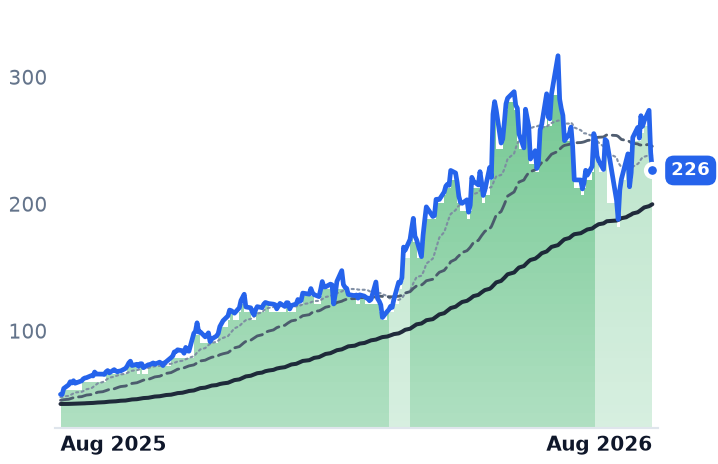
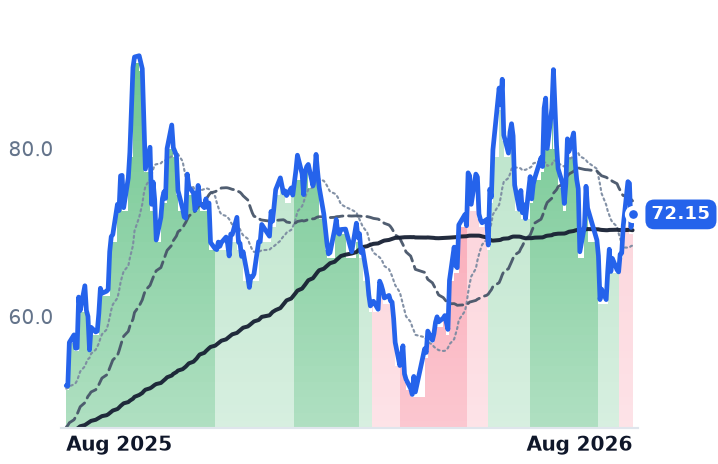
Every major pure-play foundry reported accelerating revenue and a wider gross margin. GlobalFoundries lifted gross margin 411 basis points year on year, with communications and data-center revenue up 62%. Hua Hong raised selling prices about 3% sequentially. Their shares fell anyway — GlobalFoundries 27% in three months, Hua Hong 25% in a month — on an August rate shock and fears over artificial-intelligence capital spending, not on loading. The two are not the same case: GlobalFoundries trades at 12.8 times trailing EV/EBITDA, Hua Hong at 42.2 times while burning cash.
| Ticker | Company | Segment | Trend · 13mo | 30D | 1Y |
|---|---|---|---|---|---|
| The subject · what this brief is about | |||||
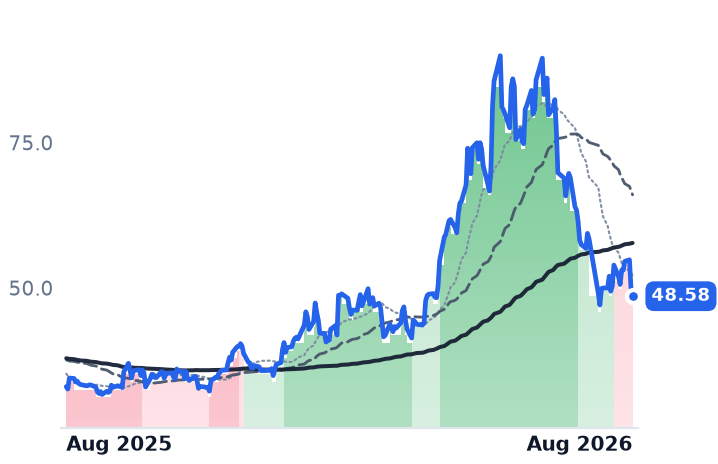
GFS | GLOBALFOUNDRIES | Logic Foundries | 🟢 Cont. Bull | −18.2% | +47.1% |
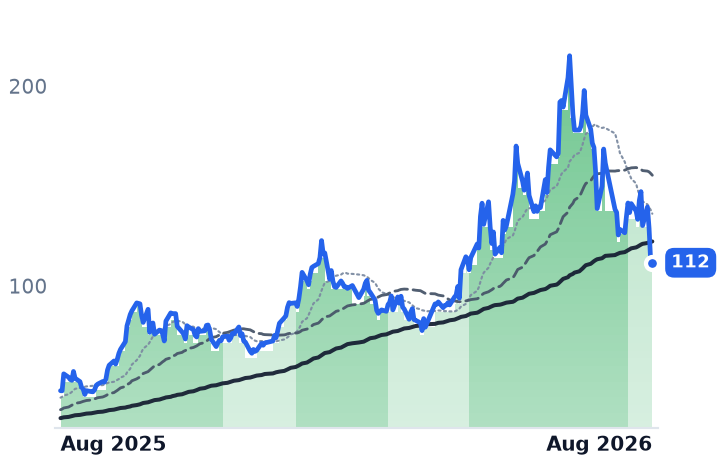
1347.HK | Hua Hong Semiconductor | Semiconductors | 🟢 Cont. Bull | −33.8% | +134.7% |
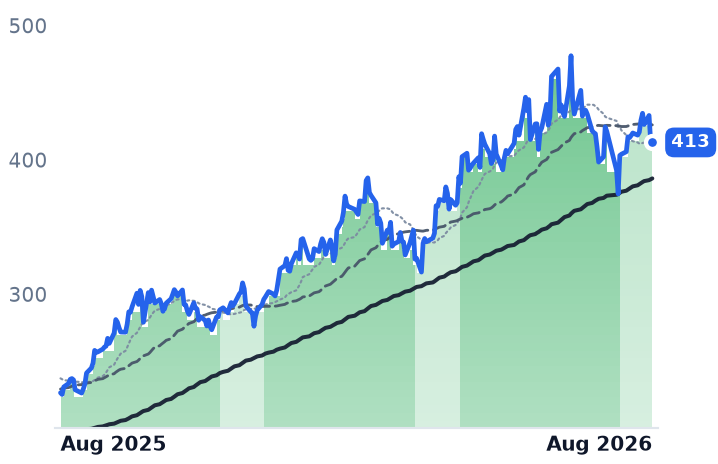
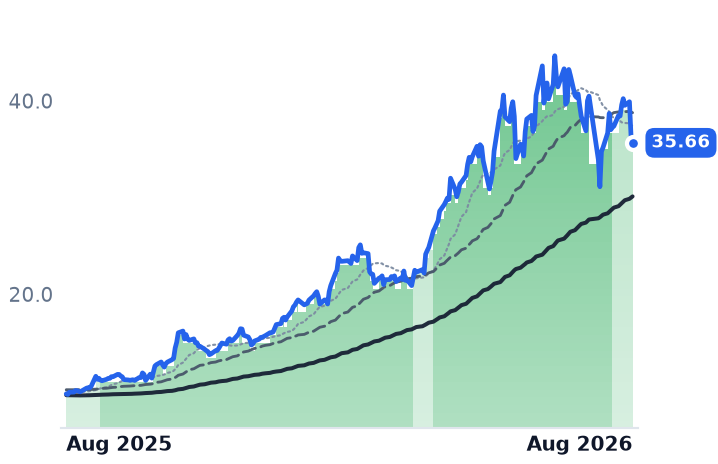
TSM | Taiwan Semiconductor Manufacturing | Logic Foundries | 🟢 Cont. Bull | −2.9% | +81.8% |
| Compared against · context, not the story | |||||
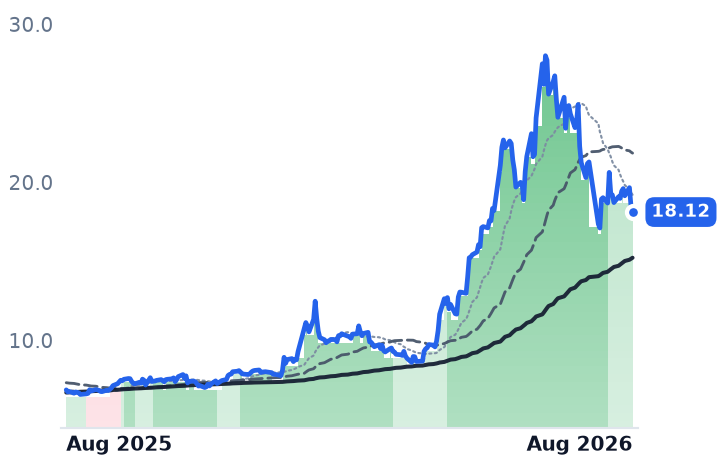
UMC | United Microelectronics | Logic Foundries | 🟢 Cont. Bull | −14.5% | +163.8% |
TSEM | Tower Semiconductor | Logic Foundries | 🟢 Cont. Bull | −9.7% | +352.5% |
0981.HK | Semiconductor Manufacturing International | Semiconductors | 🟢 Cont. Bull | −4.4% | +39.4% |
ASX | ASE Technology | Packaging & Assembly | 🟢 Cont. Bull | −10.9% | +268.0% |
12-month price & trend
| Ticker | Mkt cap | P/E | P/E fwd | P/S | P/S fwd | P/GP | P/GP fwd | EV/EBITDA | FCF yld |
|---|---|---|---|---|---|---|---|---|---|
GFS | $26.7B | 37.4x | 25.1x | 3.8x | 3.6x | 14.0x | 13.3x | 12.8x | 3.0% |
1347.HK | $194.4B | 245.6x | — | 9.2x | — | 53.3x | — | 42.2x | -4.8% |
TSM | $2.1T | 27.5x | — | 13.9x | — | 21.6x | — | 18.2x | 1.8% |
| Ticker | Mkt cap | P/E | P/E fwd | P/S | P/S fwd | P/GP | P/GP fwd | EV/EBITDA | FCF yld |
|---|---|---|---|---|---|---|---|---|---|
UMC | $45.2B | 17.3x | — | 5.8x | — | 18.9x | — | 8.9x | 4.1% |
TSEM | $25.6B | 89.6x | 59.1x | 15.1x | 13.1x | 56.3x | 48.8x | 45.5x | 1.2% |
0981.HK | $776.6B | 218.6x | — | 11.3x | — | 56.8x | — | 23.4x | -4.8% |
| Ticker | Mkt cap | P/E | P/E fwd | P/S | P/S fwd | P/GP | P/GP fwd | EV/EBITDA | FCF yld |
|---|---|---|---|---|---|---|---|---|---|
ASX | $78.4B | 42.4x | — | 3.6x | — | 18.7x | — | 18.2x | -1.2% |
Consensus projections
| Ticker | FY2026E | FY2027E | FY2028E | |
|---|---|---|---|---|
GFS | Revenue | +8.0% | +12.3% | +13.8% |
| EPS | +17.7% | +31.7% | +34.0% | |
1347.HK | Revenue | +25.9% | +19.4% | +15.6% |
| EPS | +164.4% | +48.2% | +30.1% | |
TSM | Revenue | +42.0% | +34.4% | +26.0% |
| EPS | +65.3% | +30.6% | +26.2% | |
UMC | Revenue | +18.0% | +23.0% | +14.8% |
| EPS | +104.3% | −1.3% | +22.8% | |
TSEM | Revenue | +24.4% | +36.1% | +30.1% |
| EPS | +75.5% | +69.0% | +61.6% | |
0981.HK | Revenue | +18.7% | +16.9% | +13.1% |
| EPS | +42.1% | +31.0% | +27.7% | |
ASX | Revenue | +26.2% | +23.7% | +19.7% |
| EPS | +104.8% | +50.1% | +34.1% |
Forward fiscal years only. Blank means no analyst coverage for that year.
The power-management chips inside an artificial-intelligence server are not made on leading-edge lines. They are made on 8-inch wafers using processes two decades old, in fabs the industry spent three years writing off as structurally oversupplied. Those lines are now close to full.
Average utilization of 8-inch capacity at the world's ten largest foundries is expected to approach 90% in 2026, up from 80% in 2025, pulled by power-management demand from AI servers. Foundry quotes rose 5% to 15% between the first and second quarters, with mature-node specialists raising list prices from April. A capacity crunch has since pushed an overflow of orders toward Chinese foundries. The glut thesis is, for now, wrong.
The shares have not noticed.
The business against the price
GlobalFoundries, the US-and-Singapore specialty foundry that builds radio-frequency front-ends, power management and embedded memory rather than chasing sub-14nm logic, earned $1.786bn in the June quarter, up 5.8%. Gross profit grew 23.8% — four times faster than sales. Gross margin reached 28.3%, the fourth consecutive quarterly improvement. Shipments were roughly 625,000 300mm-equivalent wafers, up 8% year on year, and management says about ten percentage points of utilization runway remain in the installed base before new capacity is needed.
The growth is not where its reputation says it is. Communications infrastructure and data center revenue rose 62%, the segment's fastest since 2022, and full-year guidance for it was raised to 50–60% growth from the high thirties, on silicon photonics and silicon-germanium optical parts. The company won seven optical-networking designs in the quarter across four of the five largest pluggable-transceiver suppliers, and says its silicon-germanium line is oversubscribed through 2027. It is taking sockets from other specialty foundries, not from TSMC.
One genuine blemish: operating income fell 11.2% to $174m and net income fell 27.2%, as acquisitions of Synopsys' ARC processor business and a voltage-regulator team absorbed the gross-line gains. And handset exposure is deteriorating for an unusual reason — surging memory prices are crowding out other content in phone bills of materials, which cut the smart-mobile outlook to a low-teens decline.
The stock is 27.1% below its May level and roughly 47% below its $92.55 peak. It trades at 12.8 times trailing EV/EBITDA and 25.1 times forward earnings, against consensus for revenue acceleration to 12.3% in 2027.
The same tape, a different case
Hua Hong Semiconductor, the state-linked Shanghai foundry that is the purest read on Chinese mature-node pricing, is the name the glut thesis needs — and it refutes it too. Revenue rose 24.1% to $717.5m, the fourth straight quarter above 21%. Gross margin widened 5.79 percentage points to 16.5%. Selling prices rose about 3% sequentially on price, not mix, with certain products running at 1.5 to 2 times orders against capacity, and North American revenue up 77% on AI-server power management.
But the valuation earns its fall. Operating margin was 1.30%; the company posted negative operating income in four of the last six quarters. Capital spending runs near $1.5bn a year against roughly $2.9bn of revenue, producing a free-cash-flow yield of minus 4.8% — versus positive 3.0% at GlobalFoundries. Even after a 34% decline from its July high, it trades at 42.2 times trailing EV/EBITDA.
United Microelectronics, the Taiwanese pure-play, is the cleanest confirmation of the tightening: utilization climbed to 85% from 79% and is guided above 90%, blended prices rose, and it sits at 8.9 times trailing EV/EBITDA, the cheapest here. Tower Semiconductor, the Israeli analog specialist, is the most expensive at 45.5 times, having grown silicon-photonics revenue more than 270%. TSMC diverged upward and deserved to: revenue grew 36% at a 67.7% gross margin, and it has notified customers of advanced-node price increases running through 2029.
What actually happened in August
Two sessions did most of the damage. In the week to 28 July, a chip rout on AI-debt and China-competition fears erased more than $1trn of semiconductor value; GlobalFoundries fell 16.2%. Then on 18 August, with the 30-year Treasury yield at a 19-year high of 5.33%, foundry shares fell together on no company news — Tower down 12.2%, GlobalFoundries 9.0%, TSMC 4.5%. Financing costs for fabs and the data centers they supply repriced at once.
One live variable sits over GlobalFoundries specifically: reported merger exploration with United Microelectronics, a roughly $37bn combination, which UMC's finance chief has said is not currently under discussion.
The setup
Where it stands — Mature-node pricing and utilization are rising while the shares that own that capacity have de-rated on rates and AI-spending fear. Would confirm — GlobalFoundries printing third-quarter revenue near $1.885bn at the guided 30.5% gross margin. Would invalidate — Blended wafer prices turning down at United Microelectronics or Hua Hong, or 8-inch utilization slipping back below 80%. Watch next — Third-quarter foundry results in late October, plus Hua Hong's first consolidation of Huali Microelectronics. Valuation — GlobalFoundries at 12.8x trailing EV/EBITDA and 25.1x forward earnings; Hua Hong 42.2x, Tower 45.5x, United Microelectronics 8.9x.