

Twilio's Growth Accelerated to 22%. Three Sessions Delivered Its Entire 58% Run
Hypothesis Opus 5 · Research Opus 5 · Writing Opus 5 · Prompt v1.5
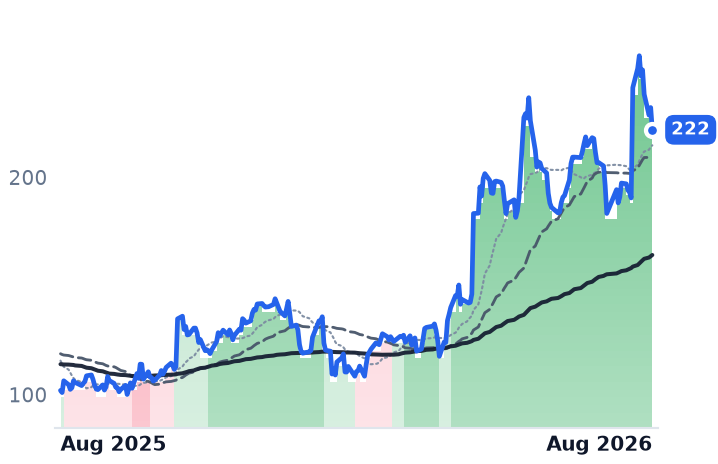
Twilio's business is genuinely improving and its shares have gone almost nowhere for four months — a contradiction hidden by three enormous days. The company that sells developers the software plumbing for text messages and phone calls grew second-quarter revenue 22% to $1.5bn, lifted dollar-based net expansion to 116% and raised full-year guidance twice. But its stock has held an uptrend since 17 April on the strength of just three sessions: 1 May, 1 June and 7 August compound to +89%, while the other 80 trading days together subtracted about 16%. Price-to-gross-profit is 12.45x, against roughly 7.2x six months ago, just as management guided organic growth down to 11-12% from 17%.
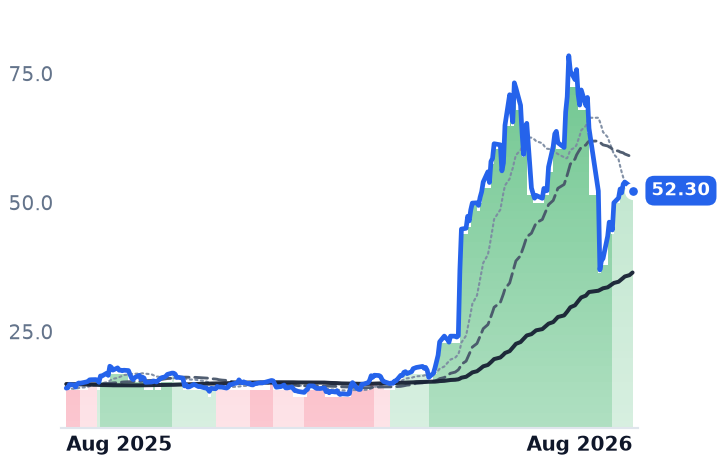
Bandwidth diverges: revenue grew 22% but gross profit only 9.6%, and it fell 42.6% in three days. RingCentral, the seat-priced incumbent AI was meant to hollow out, outran both.
| Ticker | Company | Segment | Trend · 13mo | 30D | 1Y |
|---|---|---|---|---|---|
| The subject · what this brief is about | |||||
TWLO | Twilio | Communications & Messaging Platforms | 🟢 Cont. Bull | +13.1% | +117.6% |
BAND | Bandwidth | Communications & Messaging Platforms | 🌱 Emerging Bull | −25.7% | +272.2% |
RNGR | Ranger Energy Services | Oil & Gas Equipment & Services | 🟢 Cont. Bull | +8.2% | +37.9% |
| Compared against · context, not the story | |||||
RNG | RingCentral | Communications & Collaboration | 🟢 Cont. Bull | +66.7% | +124.6% |
FIVN | Five9 | Communications & Collaboration | 🌱 Emerging Bull | +29.8% | +27.1% |
ZM | Zoom Communications | Communications & Collaboration | 🟢 Cont. Bull | +19.7% | +48.9% |
NICE | NICE | Customer Experience & CRM | 🔴 Cont. Bear | +7.2% | −26.8% |
SPY | State Street SPDR S&P 500 ETF Trust | Asset Management | 🟢 Cont. Bull | +2.8% | +21.5% |
12-month price & trend
| Ticker | Mkt cap | P/E | P/E fwd | P/S | P/S fwd | P/GP | P/GP fwd | EV/EBITDA | FCF yld |
|---|---|---|---|---|---|---|---|---|---|
TWLO | $33.7B | 29.5x | 37.4x | 6.0x | 5.6x | 12.5x | 11.6x | 92.5x | 3.3% |
BAND | $1.7B | n/m | 29.9x | 2.0x | 1.9x | 5.5x | 5.0x | — | 4.3% |
RNG | $5.7B | 51.1x | 13.1x | 2.2x | 2.2x | 3.1x | 3.0x | 20.5x | 11.8% |
| Ticker | Mkt cap | P/E | P/E fwd | P/S | P/S fwd | P/GP | P/GP fwd | EV/EBITDA | FCF yld |
|---|---|---|---|---|---|---|---|---|---|
FIVN | $2.5B | 43.1x | 10.1x | 2.1x | 2.0x | 3.8x | 3.6x | 15.2x | 7.9% |
ZM | $31.5B | 15.5x | 17.8x | 6.4x | 6.2x | 8.3x | 8.0x | 11.0x | 6.2% |
NICE | $5.9B | 14.2x | 9.0x | 1.9x | 1.9x | 2.9x | 2.9x | 6.8x | 10.8% |
| Ticker | Mkt cap | P/E | P/E fwd | P/S | P/S fwd | P/GP | P/GP fwd | EV/EBITDA | FCF yld |
|---|---|---|---|---|---|---|---|---|---|
SPY | $773.0B | — | — | — | — | — | — | — | — |
RNGR | $409.8M | 28.5x | 16.9x | 0.7x | 0.6x | 8.1x | 7.4x | 5.7x | 5.7% |
Consensus projections
| Ticker | FY2026E | FY2027E | FY2028E | |
|---|---|---|---|---|
TWLO | Revenue | +19.4% | +11.7% | +10.6% |
| EPS | +23.5% | +14.5% | +14.2% | |
BAND | Revenue | +20.0% | +4.3% | +20.2% |
| EPS | +22.2% | +9.9% | +41.0% | |
RNG | Revenue | +5.1% | +4.6% | +4.5% |
| EPS | +16.2% | +11.0% | +10.5% | |
FIVN | Revenue | +9.5% | +9.9% | +10.6% |
| EPS | +10.5% | +18.0% | +16.6% | |
ZM | Revenue | +4.2% | +4.8% | +4.0% |
| EPS | +9.7% | +1.3% | +4.0% | |
NICE | Revenue | +8.2% | +9.1% | +11.8% |
| EPS | −8.9% | +13.7% | +22.2% | |
RNGR | Revenue | +22.4% | +4.7% | +3.8% |
| EPS | +46.7% | +25.2% | +17.5% |
Forward fiscal years only. Blank means no analyst coverage for that year.
Twilio, which sells the programming interfaces that let a software application send a text message, place a call or verify a login, told investors this month that second-quarter revenue reached $1.5bn. It also told them growth in the current quarter would roughly halve.
Both statements are true, and together they describe the problem with the entire usage-billed communications layer right now: the operating news has been getting better while the price paid for it has been getting much worse.
The quarter was real
Twilio's reported revenue growth has accelerated three quarters running — 14.3%, then 20.0%, then 22.0%. Dollar-based net expansion, the measure of how much more existing customers spend, reached 116%. Free cash flow was $353m in the quarter, up 34%, and GAAP operating income of $84.5m more than doubled. Management raised full-year organic growth guidance to 13-13.5% from 9.5-10.5%.
The texture matters more than the headline. Messaging revenue grew 28%, but roughly ten points of that was United States carrier pass-through fees rather than traffic; underlying messaging grew about 18%. Twilio absorbed $71m of such fees in the quarter and expects around $250m for the year. Non-GAAP gross margin of 49.1% fell 160 basis points because of them — and would have risen 60 basis points without them. The mechanism is dated and public: T-Mobile and US Cellular raised application-to-person pass-through fees effective 19 January 2026, including a new charge on inbound messages. Carriers set the fee; the platform collects it, books it as revenue, and earns nothing on it.
That is why the reported-versus-organic gap — 22% against 17% — is the number to watch, and why management guided third-quarter organic growth down to 11-12%, warning that 5% beats should not be treated as normal.
Three days, four months
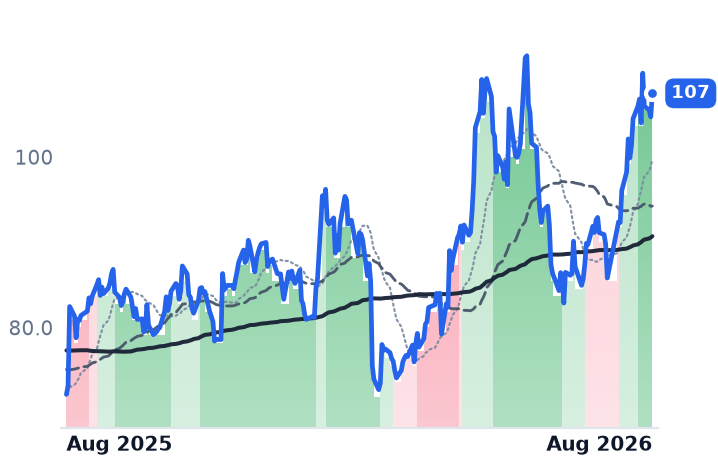
The shares have been in an uptrend since 17 April, their 50-day average above their 200-day throughout. The run is worth +58.4%, and three sessions did more than all of it: +25.3% on 1 May after the first-quarter print, +19.4% on 1 June after agentic-AI product announcements and a wave of broker target increases, and +26.6% on 7 August after second-quarter revenue beat forecasts by $70m. Those three compound to +89%. The other 80 sessions subtracted roughly 16%. Across six months, in which the stock nearly doubled, every session other than those three added about 3.5% between them. Since the 11 August closing high, the shares have given back 13%.
Valuation has to be read through gross profit here: trailing earnings are distorted by a one-off $1.07bn item in the second quarter, and the forward multiple of 37.4x sits above the trailing 29.5x. On that basis Twilio trades at 12.45x trailing and 11.58x forward gross profit, against roughly 7.2x six months ago and 6.9x a year ago.
Bandwidth's gross profit stopped following its revenue
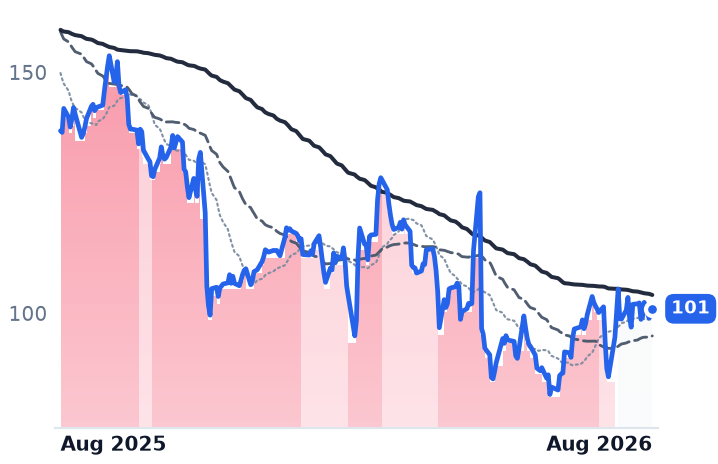
Bandwidth, which unlike most rivals owns the network its traffic runs on, grew revenue 22.2% to $219.9m — and gross profit only 9.6%, with GAAP gross margin down 4.1 points to 35.7%. Strip out surcharges and cloud communications revenue was $152m, up 12%, with voice up just 9%. Full-year cloud-communications guidance implies 11% growth. The shares fell 42.6% in three sessions to 29 July, the beat judged low-quality.
Demand did not break: net retention was 107%, customer-name retention above 99%, and five new $1m-plus wins landed, all attaching AI services. The company refinanced into $316m of zero-coupon convertible notes due 2032. Even after the crash it trades at 5.46x trailing gross profit, roughly three times its own level a year ago.
The control refuses to cooperate
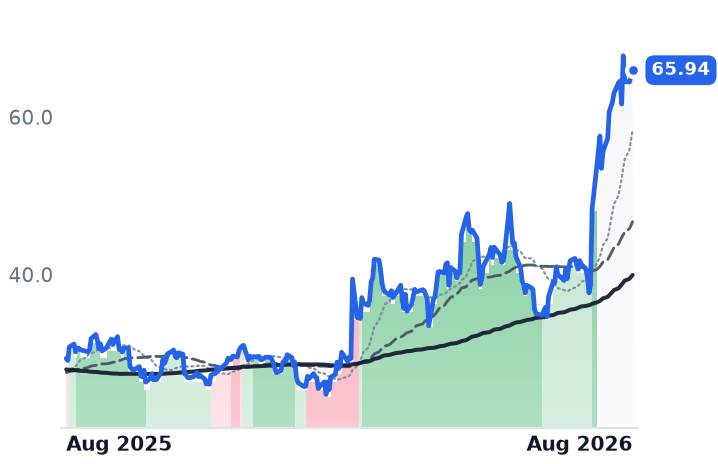
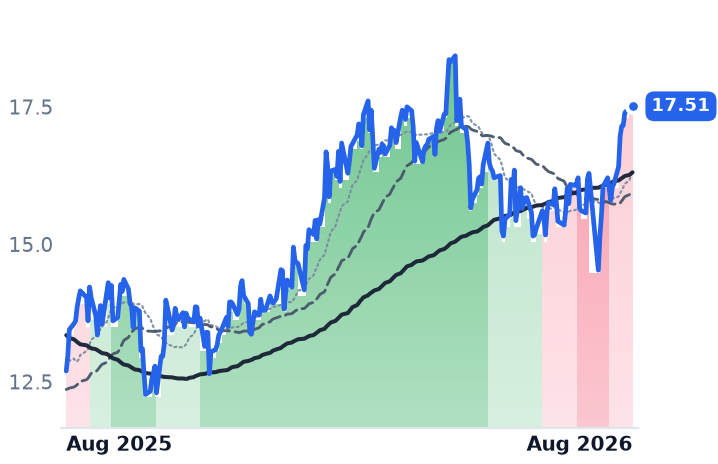
RingCentral sells business phone and contact-center seats by headcount — precisely the billing unit AI agents are supposed to erode. Revenue grew 5.9% to $657m, annual recurring revenue reached about $2.8bn, up 7%, and net subscription retention held above 99%. Paid AI products doubled to 13% of recurring revenue, its AI Receptionist reached 16,400 customers from 3,100, free cash flow rose to $180m and the dividend went up 67%. Seats are not vanishing; they are being sold AI attachments. RingCentral is also the cheapest of the three at 3.06x trailing gross profit and 13.1x forward earnings, with an 11.8% free-cash-flow yield — set against negative book value and real leverage.
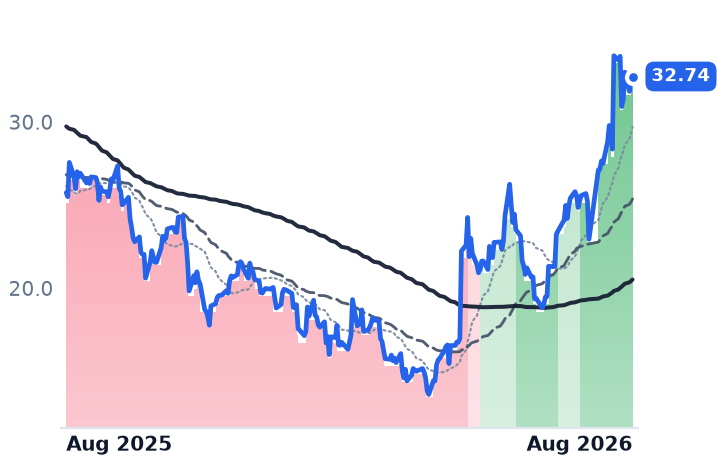
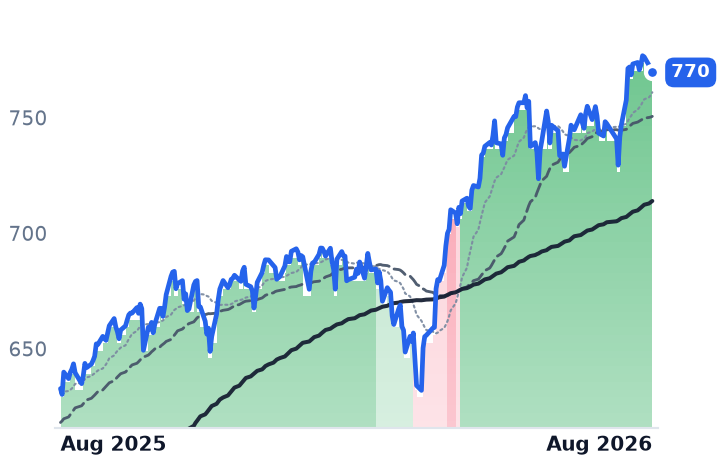
It was also the strongest of the three over the past month, up 62% against Twilio's 8%. Five9 gained 27% and Zoom 18% over the same stretch, against 3.6% for the S&P 500, as money left semiconductors — the PHLX Semiconductor Index fell from a June peak of 14,655 to 11,194 in July — for software sold off on AI-disruption fears. A rotation, not a verdict on messages versus seats.
The durable argument for Twilio is narrower and better than the rotation: direct carrier interconnects in more than 180 countries, roughly 35% of global share, and a neutral position that lets customers plug in any large language model. Per-message prices still decline 5-8% a year. Volume has to grow faster than that forever — and this quarter, management says, it will grow 11-12%.
The setup
Where it stands — Twilio's operating results are accelerating, but its gross-profit multiple has risen about 73% in six months while guided organic growth halves. Would confirm — Third-quarter organic growth printing above the guided 11-12%, with non-GAAP gross margin flat or better excluding carrier fees. Would invalidate — Dollar-based net expansion falling back below 112%, or messaging growth ex-surcharge slipping under the 5-8% annual price decline. Watch next — Twilio's third-quarter report, due early November; Bandwidth's, which must show cloud-communications growth against an 11% full-year frame. Valuation — Twilio 12.45x trailing and 11.58x forward gross profit, versus roughly 7.2x six months ago; Bandwidth 5.46x, RingCentral 3.06x.