

KRMN and CMTL: Two Small-Cap Defense Drawdowns, Two Very Different Stories
Prompt v1.0
KRMN's -38% three-month slide is a post-IPO valuation reset on a fundamentally healthy business with a $1B+ backlog and massive FY27 budget tailwinds — but demanding multiples, margin compression, CEO transition, and relentless insider selling cap the near-term recovery case. CMTL's -26% decline is more precarious: operational metrics are genuinely improving, but a ~$440M-plus capital stack dwarfs its ~$111M market cap, and a covenant holiday expiring in January 2027 creates a binary refinancing cliff.
| Ticker | Company | Segment | Trend · 13mo | 30D | 1Y |
|---|---|---|---|---|---|
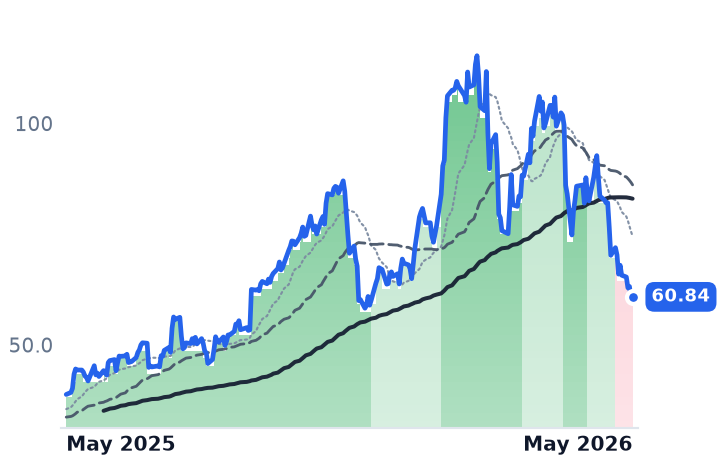
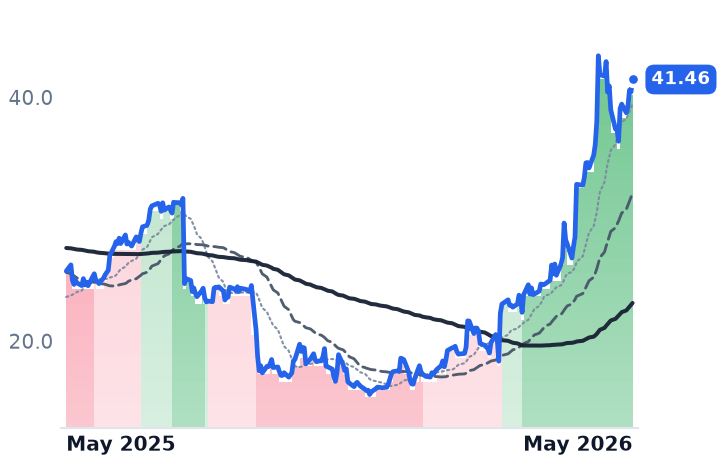
KRMN | Karman | Missiles, Weapons & Fire Control | 🟢 Cont. Bull | −27.8% | +56.8% |
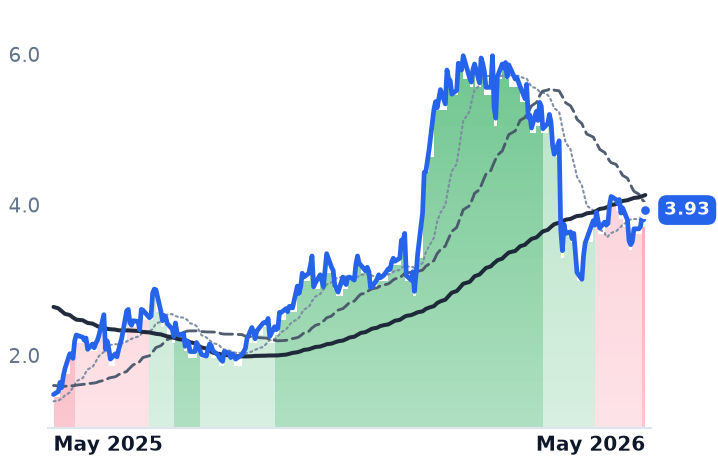
CMTL | Comtech Telecommunications | Communication Equipment | ⚠️ Emerging Bear | +4.0% | +165.5% |
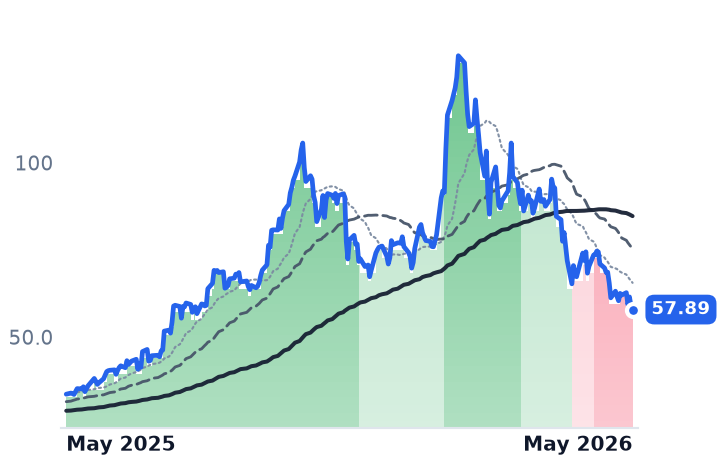
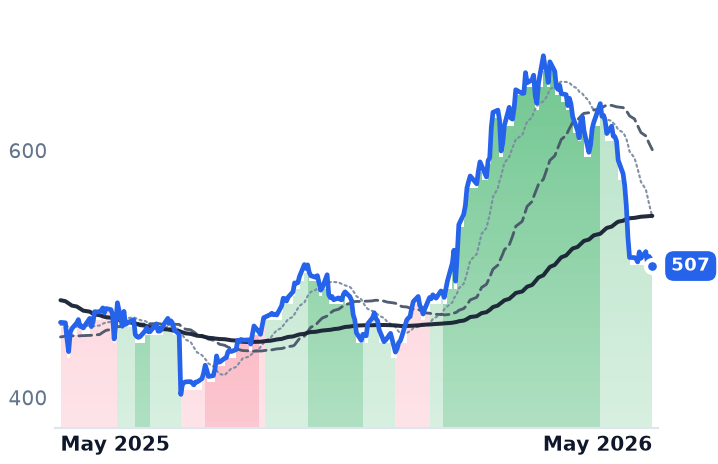
KTOS | Kratos Defense & Security Solutions | Missiles, Weapons & Fire Control | ⚠️ Emerging Bear | −15.3% | +72.2% |
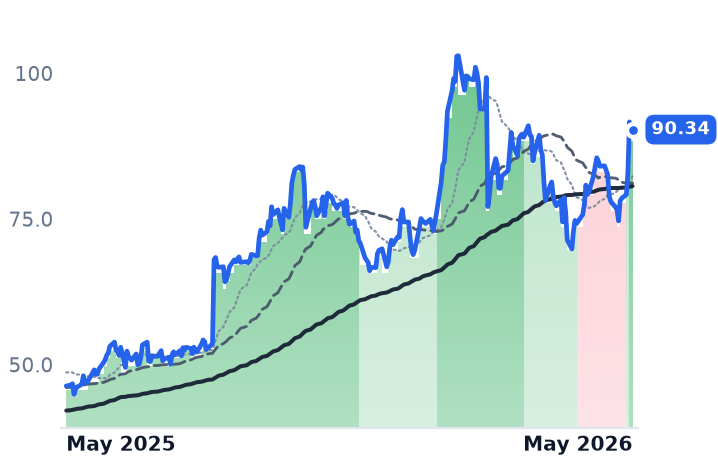
MRCY | Mercury Systems | Other | 🟢 Cont. Bull | +14.0% | +95.0% |
IRDM | Iridium Communications | Specialty & Small Carriers | 🌱 Emerging Bull | +19.7% | +61.1% |
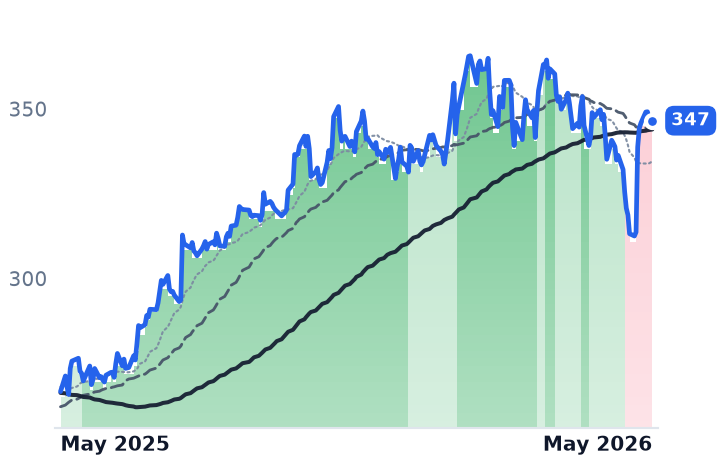
LMT | Lockheed Martin | Large Diversified Primes | 🟢 Cont. Bull | −18.8% | +9.9% |
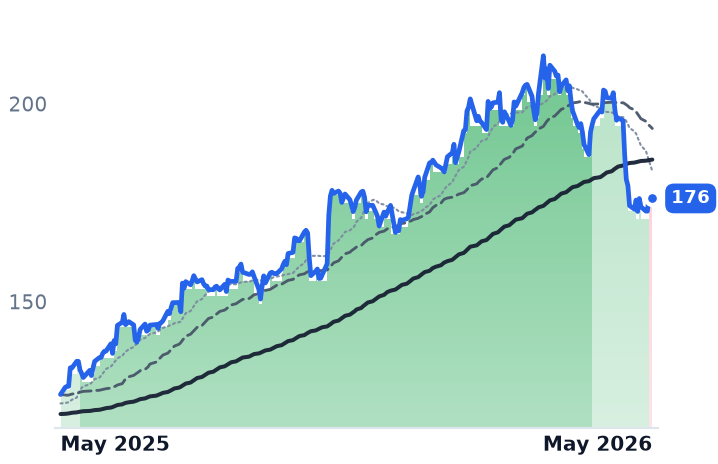
GD | General Dynamics | Large Diversified Primes | 🟢 Cont. Bull | +1.2% | +30.0% |
RTX | RTX | Large Diversified Primes | 🟢 Cont. Bull | −13.3% | +39.2% |
12-month price & trend
| Ticker | Mkt cap | P/E | P/E fwd | P/S | P/S fwd | P/GP | P/GP fwd | EV/EBITDA | FCF yld |
|---|---|---|---|---|---|---|---|---|---|
KRMN | $8.3B | 277.7x | 101.1x | 15.9x | 11.4x | 41.5x | 29.7x | 66.1x | -0.4% |
CMTL | $116.3M | 9.5x | — | 0.2x | 0.3x | 0.8x | 0.9x | n/m | 12.5% |
KTOS | $9.8B | 313.2x | 68.0x | 6.9x | 5.6x | 31.7x | 25.9x | 83.6x | -1.4% |
| Ticker | Mkt cap | P/E | P/E fwd | P/S | P/S fwd | P/GP | P/GP fwd | EV/EBITDA | FCF yld |
|---|---|---|---|---|---|---|---|---|---|
MRCY | $5.5B | n/m | 86.8x | 5.7x | 5.8x | 20.6x | 20.8x | 64.1x | 1.3% |
IRDM | $5.3B | 57.0x | 48.9x | 6.0x | 5.8x | 8.5x | 8.2x | 16.3x | 5.4% |
LMT | $119.0B | 24.8x | 17.2x | 1.6x | 1.5x | 16.1x | 15.3x | 17.0x | 4.8% |
| Ticker | Mkt cap | P/E | P/E fwd | P/S | P/S fwd | P/GP | P/GP fwd | EV/EBITDA | FCF yld |
|---|---|---|---|---|---|---|---|---|---|
GD | $90.5B | 20.8x | 20.1x | 1.7x | 1.6x | 11.0x | 10.7x | 15.2x | 6.9% |
RTX | $230.5B | 31.8x | 24.7x | 2.6x | 2.5x | 12.6x | 12.1x | 19.0x | 3.6% |
Consensus projections
| Ticker | FY2026E | FY2027E | FY2028E | |
|---|---|---|---|---|
KRMN | Revenue | +55.3% | +28.0% | +25.9% |
| EPS | +71.4% | +51.4% | +31.2% | |
CMTL | Revenue | −8.8% | +4.6% | — |
| EPS | −67.3% | −16.7% | — | |
KTOS | Revenue | +30.5% | +23.7% | +20.9% |
| EPS | +44.0% | +40.0% | +29.9% | |
MRCY | Revenue | +8.6% | +9.1% | +10.2% |
| EPS | +164.9% | +44.7% | +39.5% | |
IRDM | Revenue | +4.5% | +4.9% | +9.7% |
| EPS | −4.2% | +33.5% | +20.3% | |
LMT | Revenue | +6.1% | +5.4% | +5.5% |
| EPS | +38.4% | +7.1% | +6.2% | |
GD | Revenue | +6.4% | +4.6% | +4.2% |
| EPS | +7.9% | +9.5% | +7.9% | |
RTX | Revenue | +8.1% | +7.0% | +6.8% |
| EPS | +11.5% | +9.8% | +10.5% |
Forward fiscal years only. Blank means no analyst coverage for that year.
Two Separate Calls Hiding Inside One Theme
On the surface, Karman Space & Defense (KRMN) and Comtech Telecommunications (CMTL) look like the same trade — small-cap defense/satcom subcontractors quietly bleeding into multi-month drawdowns while rocket and EO names rip higher. Beneath the surface, the drivers are almost entirely different, and conflating them into a single "washed-out defense sub" thesis is a mistake.
KRMN: Healthy Business, Punishing Valuation Reset
KRMN closed at $60.84 on May 8, 2026, down -37.9% from $97.94 three months earlier — a move that coincides almost precisely with its March 25, 2026 earnings call. The business, however, is not broken.
KRMN's Q4 2025 delivered record revenue of $134M (+47% YoY), a backlog of $801M (+38% YoY), and adjusted EBITDA of $42M (+59% YoY). The company then raised its 2026 guidance to $715M–$730M in revenue — roughly 53% growth year-over-year — and backlog surpassed $1 billion, providing approximately 80% visibility to the midpoint. The 2026 consensus stands at $724.5M revenue and $0.66 EPS; 2027 at $923.6M and $0.97 EPS.
The FY27 defense budget is also a direct tailwind. The Pentagon's FY27 request includes a 188% increase in missile procurement to $70.5B, with THAAD alone commanding $11.4B for 857 interceptors. KRMN supports programs with massive planned production rate increases: AIM-9X +100%, THAAD +200%, Standard Missile +200%, PAC-3 +300%. Management flagged Golden Dome contract awards could materialize "as early as Q4 2026, with real volume in 2027." The White House's $17.5B Golden Dome line item and $200M in FY26 reconciliation funds earmarked for SM-2/SM-3/SM-6 solid rocket motor production are directly aligned with KRMN's served programs. The company also received $5M in Defense Production Act Title III funding in October 2025 to expand nozzle capacity, co-investing $10M alongside the government.
So why is the stock down nearly 40%? Analysts point to weaker-than-hoped Q4 margins and guidance that implies shrinking margins amid costly expansion — gross margin collapsed to 16.5% in Q4 2025 from 41% in Q3 2025, driven by the Seemann Composites and MSC acquisition's cost-plus contract mix. That dilution is baked into 2026 guidance, but it spooked a market that had priced KRMN for perfection: trailing P/E of ~455x, forward P/E of ~91x, EV/EBITDA of ~71x trailing.
Compounding the valuation problem: a CEO transition (Jon Rambeau assumed the role the same week as earnings, replacing 44-year veteran Tony Koblinski), $768M in total debt at roughly 4.5x EBITDA (with the CFO targeting ~3x by end-2026), and zero insider purchases against eight insider sales in the past six months — including former CEO Koblinski selling 300,000 shares for roughly $19.6M. Needham and William Blair maintained Buy ratings, but the insider tape tells a different story about near-term confidence.
CMTL: Real Turnaround, Dangerous Capital Structure
CMTL closed at $3.93 on May 8, 2026, down -25.7% over three months — with the sharpest leg occurring on March 17, a -25% single-session break after its Q2 FY2026 earnings release. Unlike KRMN, the operational story here is improving. Gross margin expanded from 12.5% in Q1 FY2025 to 33.9% in Q2 FY2026 as the company wound down low-margin VSAT, GFSR, and legacy troposcatter service contracts. Four consecutive quarters of positive operating cash flow have been reported, and Q2 FY2026 showed a 1.64x book-to-bill ratio with net bookings of $175.4M — lifting funded backlog to $732M with roughly $1.1B of total revenue visibility. A $130M+ multiyear contract extension from a Tier 1 US telco (Allerium/NG-911) and production delivery of next-gen DCG-7000 modems represent tangible execution milestones.
But the capital structure is the story: $125M senior credit facility, $102.8M in subordinated debt (including PIK interest), $32.5M in make-whole amounts, and a $213.4M convertible preferred liquidation preference — all sitting above a common equity market cap of roughly $111M. Covenant testing is suspended until January 31, 2027, but that holiday creates a hard binary: management must resolve the PIK preferred and demonstrate compliance before that date, or face a refinancing cliff. FY2026 consensus EPS stands at -$2.39, with FY2027 at -$1.99. Only one analyst covers the name.
Sector Context: This Is Not a Budget-Share Problem
KTOS fell -36.6% in the same three-month window as KRMN, while MRCY gained +17.1% and IRDM surged +112.5%. The divergence confirms that the underperformance is concentrated in high-valuation, post-2024 growth names that were priced for flawless execution — not a sector-wide defense budget signal failure. The budget backdrop for missile defense and satcom subcontractors is, by most measures, the strongest in a decade.
What to Watch
For KRMN: Q1 2026 earnings (date not yet confirmed) will be the first read on whether the Seemann/MSC integration is tracking management's deleveraging path. Golden Dome contract award timing and any supplemental defense spending announcements related to recent geopolitical escalation could serve as re-rating catalysts. The insider selling overhang — particularly from outgoing leadership — warrants monitoring.
For CMTL: The Q3 FY2026 earnings release (likely June 2026) is the next meaningful data point, but the January 2027 covenant test is the real pivot. Any capital structure announcement before that date — refinancing, preferred conversion, equity raise — would be the signal that resets the risk/reward calculus on the common equity.